
Coming Home After a Hurricane: The Naples Plumbing Checklist
The after hurricane plumbing checklist for a Naples home is mostly about order, because the expensive mistakes happen in the first thirty minutes: water turned on before the house was walked, a heater relit while its tank sat empty, ice made from a line still under a boil notice. Hurricane season peaks near September 10 (National Hurricane Center, 2026), which means the week you are most likely to need this sequence is also the week to read it. Five checks, in the order that protects you, with the stop-and-call findings marked.

A post-storm plumbing check is a short, ordered inspection you run before returning the house to normal service: confirm the main valve's state, resolve the boil water question, prove the drains, restart the water heater correctly, then walk the outside. The order matters because each step protects the next. Water damage and freezing already produce a property claim in about one in 60 insured homes in an ordinary year (Insurance Information Institute, 2026); the week after a hurricane is not an ordinary year.
Before you open the main valve
If you closed the main before evacuating, leave it closed until you have walked every room and looked at every ceiling. A supply line that failed during the storm floods the moment pressure returns, and the walk costs ten minutes. If the main was never closed, close it now, read the meter, and note the number before anything else.
The walk is looking for four things: ceilings and walls with new stains, cabinet floors under sinks, the water heater pan, and any fixture that looks moved or struck. Open the highest faucet in the house before repressurizing so trapped air leaves quietly instead of hammering the lines.
Then open the main slowly, halfway at first, and go stand at the meter for two minutes. If its low-flow indicator spins with every fixture off, something is leaking where you cannot see it, and our shutoff valve guide covers isolating it from here. That finding is a stop-and-call.
The boil water notice, decoded
Under a boil notice, the CDC's instruction is exact: "Bring clear water to a rolling boil for 1 minute," then let it cool (CDC, 2026). Boiled or bottled water covers more than drinking: the CDC's do-not-use list for suspect water includes washing dishes, brushing teeth, preparing food, washing hands, making ice, and making baby formula (CDC, 2026).
The ice maker is the trap in that list. It keeps making ice from the suspect line all day, and cubes made after the storm started belong in the trash along with everything in the bin. Skip the refrigerator's water dispenser for the same reason until the notice lifts.
The CDC is also blunt about shortcuts: "Boiling is the best way to kill germs in water" (CDC, 2026), and a household pitcher filter is not a substitute. The utility lifts a notice only after its follow-up sampling clears, so treat the notice as on until the utility itself says otherwise.
Drains, toilets, and what gurgling means
Run water in every fixture and flush every toilet once, then listen. Free-flowing drains that stay quiet mean the path to the sewer survived. Gurgling with nothing else running, bubbles rising in a toilet, or water appearing in the tub when a sink drains all say the same thing: the line to the street is obstructed or the system beyond it is still overloaded.
In this county that is often not your pipe at all. Much of the network relies on pumped lift stations, and a station that lost power backs sewage up toward the lowest connected drains hours after the wind stops, which is why our storm season guide tells that story in full. The practical rule: symptoms in more than one fixture, stop using water and wait or call.
One storm-specific check: if your home sat in floodwater, do not run the dishwasher or washing machine until the drains have proven themselves. Both push high volume fast, and they will find a blocked line the hard way, on your floor.
The water heater restart order
The heater restarts last, after water service is proven, and the order is water first, then energy. Confirm the tank is full by opening a hot tap and getting steady flow, then restore the breaker or relight per the unit's label. Energizing an empty electric tank burns out its elements in minutes; a flooded gas unit's controls need a professional look before relight.
The full-tank check exists because a heater that drained during the outage looks exactly like one that did not. Open a hot faucet and let it run until the sputtering stops and flow is steady. That is the tank telling you it is full; until then, keep the power off.
If storm water reached the unit, stop there. Flooded gas valves and burner assemblies, and soaked electrical controls, are a replace-or-inspect decision, not a relight decision. Our water heater lifespan guide covers what a soaked unit's future looks like, and it is usually short.
The outside walk: bibs, meter, and the yard
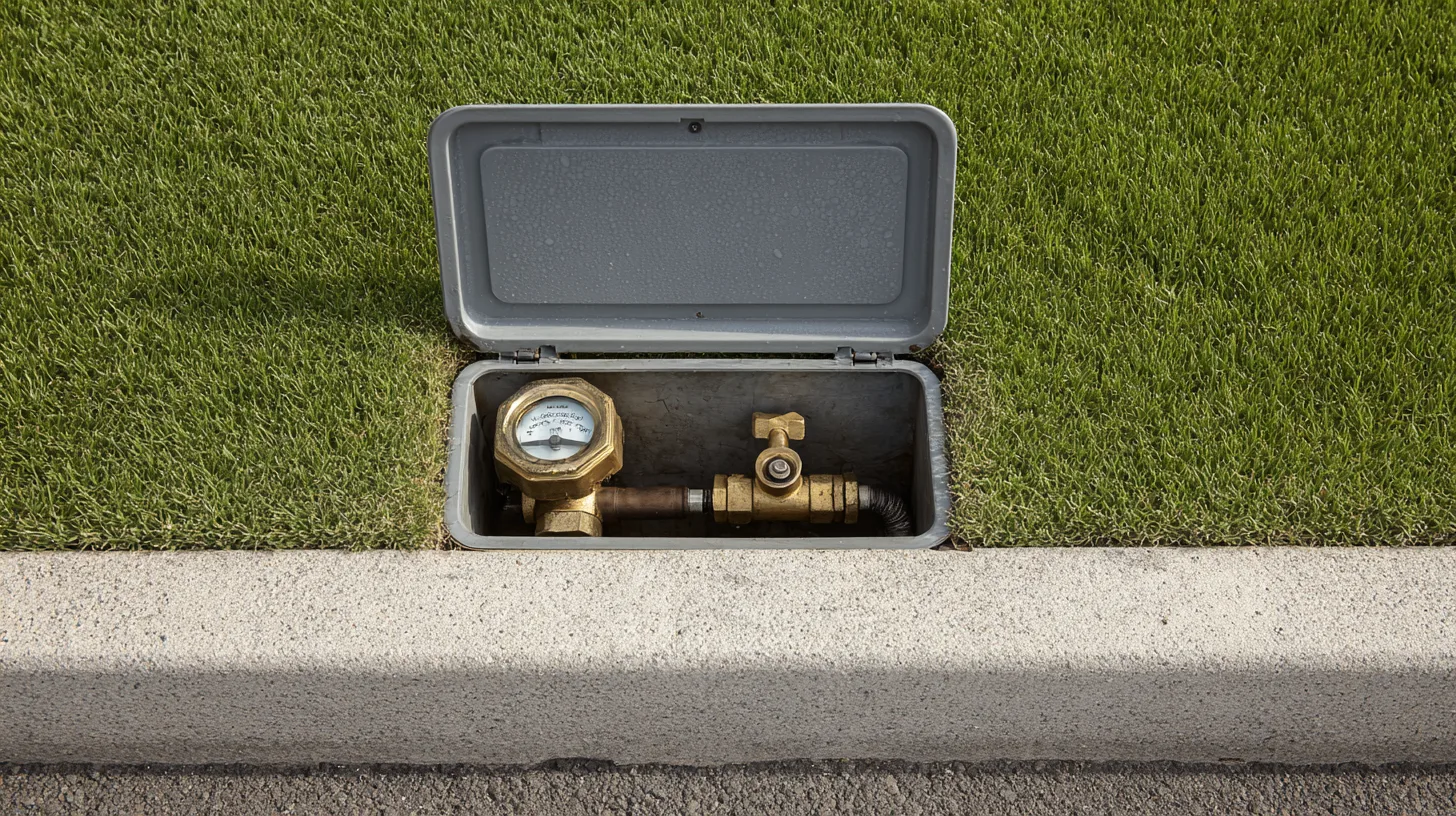
The last pass is outside: every hose bib opened briefly and closed firm, the meter box lid lifted to check for standing water and a still indicator, the yard read for new soft spots or sunken lines along the path from the meter to the house. Debris strikes and shifted ground do their damage quietly out here.
A bib that dribbles from the stem after the storm may just need a washer, but a soft, wet patch of yard on the supply line's path with the house valves closed is the classic sign the service line took damage. Note it, photograph it, and make the call before it undermines the driveway.
Photograph everything you find on this walk, dated. If any of it becomes an insurance conversation later, the pictures from the day you returned are the evidence that it was storm damage, and the habit costs nothing. If the list you built is empty: welcome home. Close the checklist and go unpack.
This article, answered
The questions readers ask about this topic, answered the way an answer engine would. No forms, no sales pitch.
JAMIE KLONCZ · GREAT HERON PLUMBING ONLINE Pick a question on the left, or search above. You will get the direct answer, the way an answer engine would give it.
PUBLISHED August 30, 2026 · WRITTEN BY JAMIE KLONCZ, FOUNDER · GREAT HERON PLUMBING