
How to Prepare Your Home's Plumbing for a Hurricane in Naples
Hurricane plumbing preparation in Naples comes down to two shutoffs and one test you run weeks early: confirm the main water valve actually turns, know how to secure the water heater, and clear the drainage around the house before the rain arrives. The peak of the Atlantic hurricane season is September 10, with most activity between mid-August and mid-October (National Hurricane Center, 2026), so the time to find a seized valve is now, not the night a cone appears.

Pre-storm plumbing preparation is the short sequence that limits water damage from a hurricane: shutting off or securing the water supply, protecting the water heater, and clearing the paths that rain uses to leave your property. It matters because the plumbing failures that follow a storm are usually not dramatic pipe breaks. They are a supply line weeping into a wall of an empty house, or a yard drain that was already half blocked in July.
The two shutoffs that decide everything
The main water shutoff valve and the water heater are the two controls that determine how a storm treats your plumbing. Close the main valve and the house cannot flood from the supply side no matter what breaks. Secure the heater and a power outage cannot cook an empty tank. Everything else on a hurricane plumbing checklist supports those two moves.
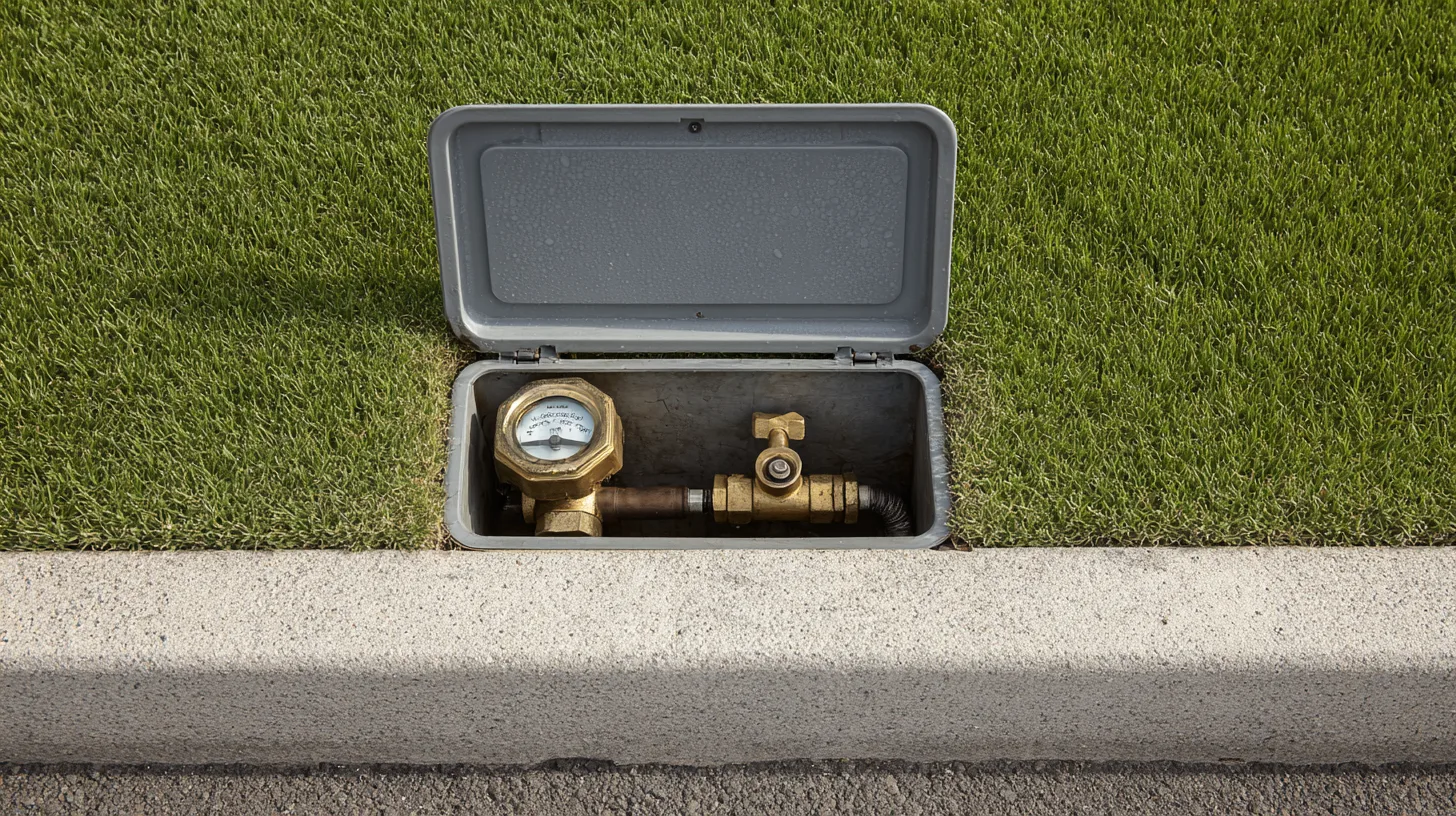
The main shutoff is usually at the meter box near the property line, and most Naples homes have a second valve where the supply enters the house. The house-side valve is the one you want, and the one most likely to fail you: older gate valves sit untouched for years in Florida humidity. A valve that will not turn under storm pressure is not a valve. It is a decoration.
So the real preparation task is a test, run on a calm day: close the valve fully, confirm water stops at a faucet, and reopen it. If it seizes, weeps, or spins without stopping flow, swapping in a quarter-turn ball valve is a small job now and an impossible one mid-evacuation. Ordinary household leaks already waste 9,400 gallons per family per year (EPA WaterSense, 2026); an unattended supply failure in an evacuated house operates on another scale entirely.
The pre-storm sequence if you evacuate
If you are leaving ahead of the storm: shut off the main water valve, turn off power to the water heater at the breaker, shut off the water heater's cold inlet, and switch off the irrigation controller. In a gas home, set the heater to pilot or off per the label. The order matters less than finishing all four before you lock the door.
Water first. Close the main valve so the supply side of the house is dead. That single action removes the most common source of storm-week interior damage: a small failure that runs unattended for days.
Then the heater. An electric heater with power left on can dry-fire its elements if anything siphons the tank down; killing the breaker costs nothing and prevents it. Close the cold inlet on top of the tank too. Do not drain it. Fifty gallons of clean stored water is an asset after a storm.
Finally, the outside: irrigation controller off so a cracked zone line does not run for days, hoses disconnected, and anything that can become debris moved indoors. The whole sequence takes half an hour when the valve works. Which is the argument for the test above.
The sequence if you shelter in place
Staying home changes the plumbing plan: leave the main valve open but know exactly where it is, fill the bathtub and spare containers with utility water, and set the water heater to its lowest setting rather than off. You are preparing to lose services while living in the house, which is a different problem from protecting an empty one.
The bathtub is not drinking water. It is flushing and washing water for the days when the utility may be on a boil notice or off entirely. Fill it before the wind starts, along with any large pots for drinking water, and treat the two supplies differently.
Keep the heater on its lowest setting instead of off. If power holds, you keep hot water; if it fails, the tank becomes stored utility water you can draw from its base valve. Know where your main shutoff is before the storm: if a supply line fails mid-event, closing that valve is the entire emergency response until conditions allow more. The Atlantic season runs June 1 to November 30 (National Hurricane Center, 2026), and this same preparation covers the lesser storms that repeat all summer here.
Drains, gutters, and the yard before the rain
A hurricane drops rain faster than any drainage path in Naples was designed to move it. The preparation is mechanical, not clever: clear gutters and downspouts, uncover yard and driveway drains, and walk the swale to confirm water has somewhere to go. A drain that is half blocked in fair weather is fully blocked in a storm.
Naples drainage is flat and engineered, which means it works until any link in the chain clogs. City guidance asks residents to help keep the drains and grates near their homes clear before, during, and after heavy rainfall (City of Naples, 2026), and the reason is practical: crews cannot reach every inlet during an event, and the water that cannot enter a blocked inlet finds your garage instead.
Nationally, household leaks alone waste approximately nearly 900 billion gallons of water a year (EPA WaterSense, 2026). That number is worth holding next to a storm: the water a hurricane delivers to one lot in an afternoon dwarfs what most homes mishandle in a year, and the only variable you control is how freely it leaves. Gutters, downspout extensions pointed away from the slab, cleared swales. Unglamorous, and decisive.
What happens underground when the power fails
Most of Naples moves its wastewater with electricity. The City of Naples sewer system alone runs 120 pump stations (City of Naples, 2026), and when a storm takes their power, sewage stops moving toward the plant and the level in the mains rises. That is why drains can back up during and after a storm even when nothing in your house is blocked.
This is the part of hurricane preparation nobody puts on a checklist, because there is no valve for it inside the house. Once the mains are full, the lowest opening on the network becomes the relief point, and in a one-story Naples home that can be a shower drain.
What you can do beforehand is modest but real: use fixtures sparingly once heavy rain begins, know which fixture sits lowest, and if the house has backed up in past storms, ask about a backwater valve in the off season. The full mechanism is covered in our storm season sewer backup guide. The short version for preparation week: a backup that arrives with the rain is usually the system, not your pipe, and no drain cleaning inside the house changes it.
The after-storm order of operations
Coming home, the order is: look before you open anything, restore water before power to the heater, and give the heater a full tank before its breaker comes back on. Reversing that last pair is the most expensive mistake of the week, because energizing an element in an empty tank destroys it in minutes.
Walk the house with the water still off. Look at ceilings, under sinks, at the water heater pan, and listen with everything closed: a meter that spins with every fixture off means the shutoff did its job and something failed anyway. Open the main valve slowly, then let the water heater fill completely, then restore its breaker or relight the pilot.
Outside, confirm the irrigation controller is still off until the ground drains, and check that yard drains stayed clear once the water recedes. If the main valve would not close when you left, or a fixture fails as pressure returns, that is the moment for a licensed plumber rather than persistence. The valve test at the top of this guide exists so that the after-storm sequence is boring. Boring is the goal.
This article, answered
The questions readers ask about this topic, answered the way an answer engine would. No forms, no sales pitch.
JAMIE KLONCZ · GREAT HERON PLUMBING ONLINE Pick a question on the left, or search above. You will get the direct answer, the way an answer engine would give it.
PUBLISHED August 11, 2026 · WRITTEN BY JAMIE KLONCZ, FOUNDER · GREAT HERON PLUMBING