
Naples and Collier County
The most expensive toilet fault makes no noise at all
A flapper that does not seat properly passes water continuously, day and night, and you will find it on the bill long before you hear it.
Get a plumbing quoteLast reviewed
Most toilet faults fall into three groups: a failing flapper or fill valve that lets water pass continuously, a blockage in the trap or the branch line, and a failed wax seal at the floor. Only the third involves lifting the toilet, and only the first is usually invisible.
The dye test, in fifteen minutes
The cheapest diagnostic in plumbing.
Put a dye tablet or a few drops of food coloring into the cistern, not the bowl. Leave it fifteen minutes without flushing.
If color appears in the bowl, the flapper is not sealing and water is passing continuously from cistern to bowl and away down the drain. Nothing about that is audible and nothing about it is visible from the room.
This is worth doing on every toilet in the house, not just the one you suspect. A silent leak in a guest bathroom that nobody uses is the version that runs longest before anyone notices.
Phantom flushing, and what it means
The cistern refilling on its own.
If a toilet briefly runs to refill when nobody has flushed it, water has been leaving the cistern slowly enough that the fill valve eventually triggers. It is the same fault as above, caught at a different point.
The usual causes are a warped or mineral-fouled flapper, a flapper chain that is too short and holds it slightly open, or a fill valve set so high that water runs into the overflow tube continuously.
The overflow one is worth checking first because it needs no parts: if the water level sits at or above the top of the overflow tube, lowering it is the whole repair.
A rocking toilet is not a toilet problem
It is a seal problem, and possibly a floor problem.
A toilet that moves when you sit on it has broken the seal between its base and the flange. Every flush then passes a small amount of water under the base rather than into the drain.
That water goes into the subfloor. In a slab home it spreads; in a raised floor it rots. Either way the damage accumulates silently and the repair cost grows with time rather than with severity.
Tightening the bolts is not the fix and often makes it worse, because it cracks the porcelain. The toilet has to come up, the wax seal be replaced and the flange condition checked — flanges corrode, and a failed flange is why the toilet moved in the first place.
When replacement makes more sense than repair
Rarely about the toilet, usually about the water.
Internal components are inexpensive and available, so most faults are worth repairing on any toilet in sound condition.
The exception is a very old high-volume unit. Older toilets use several times the water per flush of a current one, and on a household with several toilets the difference accumulates.
A cracked tank or bowl is not repairable and should not be patched. A hairline crack in porcelain under mains pressure fails without warning, and it fails while nobody is in the room.
How much does toilet repair or replacement cost?
Most repairs are inexpensive internal parts. What raises the price is what is found underneath when the toilet comes off.
The common repairs are internal and cheap: a flapper, a fill valve, a flush valve or a supply line. These are parts costing tens of dollars with labor attached, and on a toilet that is otherwise sound they are worth doing rather than replacing the fixture.
The item that changes the number is the flange — the fitting that anchors the toilet to the drain. Flange repair typically runs $200 to $500 when carried out during a toilet replacement, and rises where the flange is cast iron, badly rusted, set too low, or where the subfloor beneath it has rotted (Horow, 2026).
That last condition is the one worth understanding, because it is invisible until the toilet is lifted. A toilet that has been leaking slowly at the base for a long period will have been wetting the subfloor the entire time, and the repair then includes carpentry rather than plumbing.
Which is why a quote given before the toilet comes off is provisional by nature. A competent contractor will say so, and will tell you what the flange and subfloor scenarios cost if they are found, rather than presenting a single number that may not survive the first ten minutes.
What do the common symptoms actually mean?
Five behaviors, five different causes, and only one of them needs urgent attention.
A toilet that runs continuously is almost always a flapper no longer sealing, or a fill valve that does not shut off. It wastes a substantial volume of water quietly and continuously, which makes it the symptom with the largest cumulative cost and the smallest repair cost — the definition of a job worth doing promptly.
A weak or incomplete flush points at either the water level in the tank or the rim jets. Level is adjustable in a minute. Blocked rim jets are mineral accumulation, and in a hard water region they are a routine maintenance item rather than a defect.
Water on the floor at the base has two very different causes and they need distinguishing before anything is bought. Condensation on the bowl in a humid bathroom is not a leak at all. Water appearing at the base after a flush is a failed wax seal or a flange problem, and that one is wetting the subfloor every time the toilet is used.
Rocking is not cosmetic. A toilet that moves under weight is breaking the seal beneath it with every use, so a rocking toilet becomes a leaking toilet, and then becomes a subfloor problem. Shimming and re-securing it early is much cheaper than the sequence it prevents.
Gurgling, or a level that drops on its own, is the one symptom that is frequently not about the toilet. Both indicate air being displaced through the water seal because it cannot escape through the vent, which points at a partial blockage downstream and means the fixture is reporting a drainage problem rather than having one.
The practical triage: fix the running toilet promptly for the water, fix the rocking one promptly for the subfloor, and investigate the gurgling one because it is telling you about the drain rather than about itself.
When is replacing better than repairing?
When the porcelain is compromised, when parts are obsolete, or when the toilet has to come off anyway.
A crack in the porcelain is decisive. Cracks in a tank or bowl do not stop, they propagate, and the failure mode when a bowl finally goes is a substantial volume of water on the floor with no warning. There is no repair for it and nothing worth attempting.
Obsolete internals are the second trigger. On older toilets the flush valve and fill valve may no longer be available in matching form, and universal parts fit some designs and not others. Where the parts are a poor fit the repair is a compromise that will need revisiting.
The third is the one that decides most cases in practice: the toilet has to come off anyway. If a failed wax seal or a flange repair is required, the toilet is already lifted, and the labor difference between reseating the existing fixture and setting a new one is small. That is the moment when replacement is cheapest relative to repair, and it is worth deciding deliberately rather than defaulting to reseating.
Water use is a genuine argument on older fixtures, though it is a slower payback than the marketing suggests. A toilet from before modern standards uses several times the water per flush of a current one, and on a household with several bathrooms and constant use that accumulates.
The counter-case is real: a sound toilet with available parts and no seal problem does not need replacing because it is old. Porcelain does not wear out. It is the seals, the valves and the flange that fail, and all three are serviceable.
What should a toilet installation include?
A new seal, a new supply line, a checked flange and a level set. Reusing any of the first three is a false economy.
A new wax or rubber seal every time, without exception. A seal that has been compressed once has taken its permanent set, and reseating a toilet on the old one is the most common cause of a leak appearing weeks after work was done. The part costs very little; the subfloor it protects does not.
A new flexible supply line. These fail at the ferrule and they fail without warning, and replacing one during an installation costs almost nothing while replacing the flooring afterwards does not.
The flange checked properly while the toilet is off. This is the only moment it is visible, and the questions are whether it is intact, whether it is at the correct height relative to the finished floor, and whether the closet bolts have solid purchase. A flange sitting below finished floor level after tiling is a specific and common problem requiring an extender rather than a thicker seal.
The subfloor inspected around the flange for softness or discolouration. Where the previous seal was failing, this is where the damage is, and finding it while the fixture is off is materially cheaper than finding it later.
Setting level and secured, with the closet bolts tightened evenly and not overtightened — porcelain cracks at the base if they are — and the toilet shimmed where the floor is uneven so it does not rock.
A final check that matters and is often skipped: flush and observe the base through several cycles before considering the job finished. A seal that is going to fail usually shows in the first few flushes, and that is the cheapest possible moment to discover it.
What does hard water do to a toilet here?
It works on the parts you cannot see, which is why the symptoms look like unrelated faults.
Mineral accumulates in the rim jets, the small openings under the rim that direct water around the bowl during a flush. As they narrow, the flush loses its scouring action while the tank still empties normally, so the toilet appears to be working but stops cleaning the bowl properly. It is usually diagnosed as a weak flush and treated as a fill-level problem.
The same accumulation reaches the siphon jet at the bottom of the bowl, which is what generates the actual siphon that pulls waste out. A restricted siphon jet produces a flush that is slow and incomplete rather than sharp, and no adjustment in the tank compensates for it.
Inside the tank, mineral works on the flapper seat and the fill valve. A flapper that will not seal against a scaled seat produces the continuously running toilet, and replacing the flapper without cleaning the seat reproduces the fault within weeks — which is why the same repair sometimes seems not to hold.
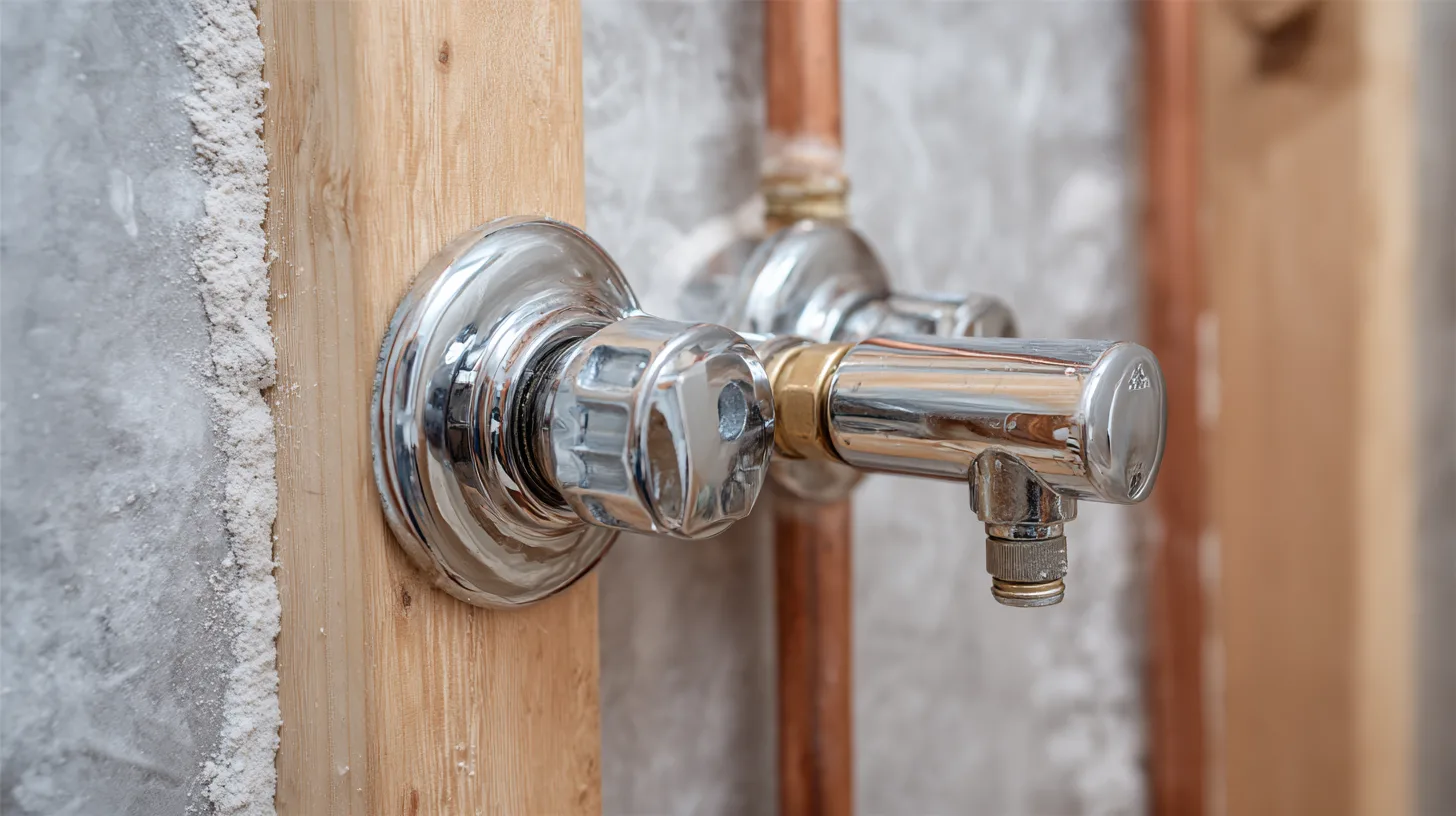
Supply shutoffs suffer too. The small angle stop behind the toilet is exactly the kind of infrequently operated valve that seizes with mineral, and discovering that during a leak is considerably worse than discovering it during a planned check.
None of this is unique to Naples, but it is faster here. Florida hard water is one of the largest variables in the life of any water-using fixture, and the appliance-level version of that argument — that treatment and equipment are the same decision — applies to fixtures as much as to water heaters.
Practically: clean the rim jets and the flapper seat when a flush weakens rather than replacing parts first, and exercise the shutoff occasionally so it still turns when it matters.
What can you check yourself before calling?
Three checks, each under five minutes, and each capable of saving a call-out entirely.
For a running toilet, lift the tank lid and watch. If water is flowing over the top of the overflow tube, the fill valve is not shutting off and the float needs adjusting or the valve replacing. If the water level is correct and the tank is still refilling periodically, the flapper is leaking past and the seat wants cleaning before the part is replaced.
For a weak flush, check the water level against the mark inside the tank. A level that has drifted low is the most common cause and it is adjustable by hand. If the level is correct, look under the rim with a mirror — restricted rim jets are mineral rather than mechanism.
For water at the base, dry the floor completely and watch through several flushes. Water appearing only in humid conditions and not tied to flushing is condensation. Water arriving with a flush is a seal or flange problem and does need attention, because it is reaching the subfloor.
For a toilet that rocks, check whether the closet bolts are simply loose before assuming anything worse. They can be tightened gently and evenly by hand — gently, because overtightening cracks porcelain at the base.
What is worth calling about without attempting: anything involving lifting the toilet, anything where the shutoff will not turn, and any crack in the porcelain. The first two turn into larger problems when improvised, and the third has no repair.
Questions about this work
Direct answers, no sales pitch.
 JAMIE KLONCZ · GREAT HERON PLUMBING ONLINE
 Pick a question on the left, or search above. You will get the direct answer, the way an answer engine would give it.
Sources
Where we work
The interactive map is not loading right now. The areas it covers:
- Naples (Core market) — The center of the service area. Every service page is written for Naples first.
- North Naples (Condo and HOA) — Planned communities and stacked buildings, where a pipe may belong to the association rather than the unit.
- Golden Gate (Septic and sewer) — Sold in 1960 with no public utilities. Some properties are on county sewer, some still on their own tank.
- Pine Ridge (Acreage lots) — One to three acre lots from the 1960s, which puts a long private lateral between the house and the main.
- Lely Resort (Post-2000) — Built out after 2000, past both the cast iron and the polybutylene eras.
- Naples Park (Pre-1972) — Streets paved in the late 1950s, squarely inside the window when cast iron was standard.
- Marco Island (Coastal, 1965 on) — Opened in 1965 and built across the material boundary, so the build phase decides the pipe.
- Bonita Springs (Lee County) — Grown in the 1980s and 90s. Young enough that pipe age is rarely the fault.
Contact
Tell us what is happening
The more you can say about the property — the neighborhood, roughly when it was built, and what it is connected to — the more useful the first answer will be.
Call (239) 404-8590Know what you need? Pick a time online and see what we actually have free.