
Guide
A leak in an empty house does not stop on its own
Every other plumbing failure gets interrupted by somebody noticing. In a house closed for five months, nothing interrupts it.
Get a plumbing quoteLast reviewed
Closing a seasonal property means isolating the water supply at the main, draining the system down at the lowest fixture, shutting off the water heater at its breaker or gas supply, and deciding deliberately what remains live. The objective is that no line in the house is both pressurised and unmonitored.
Why this matters more here than almost anywhere
Duration, not severity.
A burst supply line in an occupied house is noticed in minutes. The same failure in a house closed for the season runs continuously until a neighbour, a landscaper or a water bill raises the alarm, and by then the question is no longer plumbing.
Southwest Florida conditions do not help. Warm humid air accelerates deterioration, and high water tables and post-rain soil movement stress buried lines (First Choice Plumbing Solutions, 2026), so the closed period is not a period of rest for the system.
A house of a certain age adds to it. Polybutylene supply pipe went into Florida homes roughly between 1978 and 1995 and fails at the fittings, and Collier County has a very large proportion of homes built before 1972 with cast iron drains (Revolution Florida, 2026).
The shutdown sequence
Main, heater, drain down, then decide what stays live.
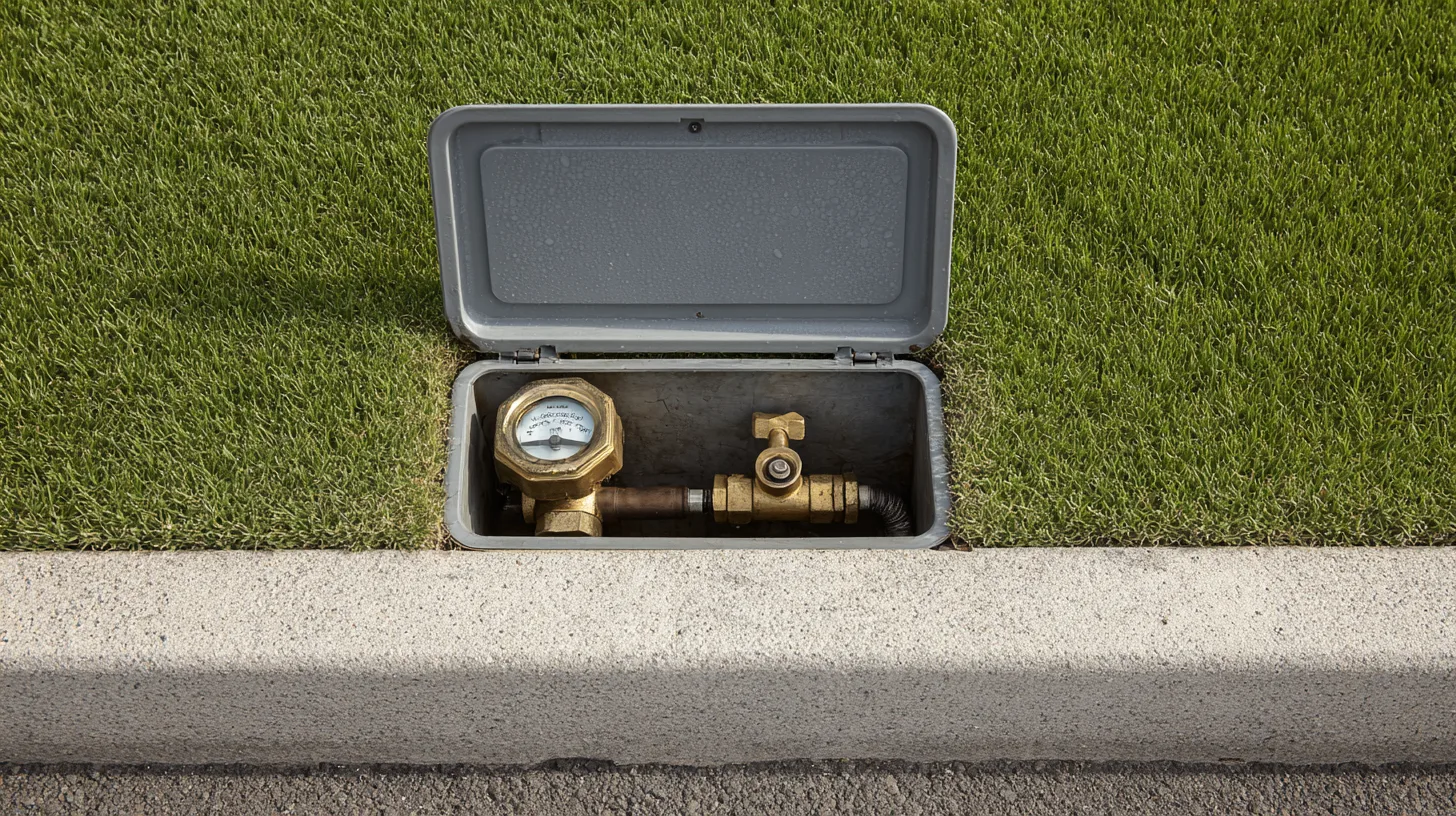
Close the main shutoff first, at the meter near the street or where the supply enters the building. If the valve is stiff, deal with that now rather than discovering it next season.
Switch the water heater off — at the breaker for an electric unit, at the gas supply for a gas one. An electric element energised in a drained tank will burn out, which is an avoidable cost.
Open the lowest fixture in the house and let the system drain down, then open a high fixture to break the vacuum so the lines empty properly. Flush toilets to empty the tanks.
Then decide deliberately what remains live rather than by default. Ice makers, water softeners, irrigation and a pool auto-fill all hold pressure or draw water, and each is a decision rather than an oversight.
What to check before you leave, and after you return
Two short inspections that catch most of it.
Before leaving: appliance supply hoses at the washing machine, dishwasher and refrigerator, which are the most common failure points in any house and are usually the oldest flexible component in it. Look for corrosion at the fittings and bulging in the hose.
Also worth doing: note the meter reading. If someone checks the property while you are away, a moving meter on a closed system is unambiguous evidence of a leak and needs no plumbing knowledge to read.
On return, open the main slowly rather than fully. A sudden repressurisation of empty lines produces a pressure surge, and a joint that has been sitting dry for months is the worst place for one.
Why does an empty house cost more when something fails?
Because the damage is set by elapsed time, and nobody is there to start the clock.
In an occupied house a supply failure is noticed in minutes. Somebody hears it, sees it, or walks into it, and the water goes off. The volume of damage is a function of how quickly that happens rather than how large the failure was.
In an empty house nothing changes about the failure and everything changes about the duration. The same fitting, the same flow rate, and a discovery window measured in weeks or months rather than minutes. That is why seasonal property produces the expensive claims rather than the dramatic ones.
Southwest Florida has an unusual concentration of exactly this exposure. Marco Island has a permanent population of around 16,000 that reaches roughly 40,000 at the peak of season (Marco Island Living, 2026), with season running from about Thanksgiving to Easter (Paddle Marco, 2026). The arithmetic on the other side of that is a large stock of housing standing empty for months.
Humidity makes the secondary damage worse than the same event elsewhere. Wet building materials in a warm humid environment do not dry passively, so the window between water arriving and materials being affected is short, and the window before anybody notices is long. Those two facts point in opposite directions.
None of this requires an unusual failure. A supply line to a toilet, an ice maker connection or a water heater fitting is enough, and all three are ordinary components that fail on ordinary properties every year.
What should actually be done before leaving for the season?
Six things. The first one removes most of the risk on its own.
Close the main and confirm it. Turning the valve is not the same as verifying it holds — check that the meter has stopped afterwards. A closed main means a supply failure has nothing to feed it, and it is the single highest-value action on this list by a wide margin.
Confirm the valve actually turns before you rely on it. Valves that have sat unused for years frequently seize, and finding that out on departure day is much better than assuming it and being wrong.
Deal with the water heater. A tank holding hot water for an empty house is heating for nobody, and turning it to a vacation setting or off entirely is straightforward. On a tankless unit there is nothing stored, which is one genuine advantage of the type for seasonal property.
Run the fixtures and the disposal before you go, so nothing organic is left sitting in a trap or a chamber for months. Then consider what happens to those traps: water evaporates from unused traps in a warm house, and a dry trap is an open path for sewer gas.
Arrange a periodic check by somebody. This is what shortens the discovery window from a season to a fortnight, and it does not need to be a professional — it needs to be a person who will open the door, look at ceilings and wall bases, and confirm nothing is running.
Photograph the property's condition before leaving. If a claim follows, the difference between the before state and the after state is the claim, and reconstructing the before state from memory is considerably weaker than showing it.
What are the failure modes specific to an unoccupied Florida house?
Five, and only one of them is a burst pipe.
Supply fittings are first and most common. Flexible connectors to toilets, ice makers and washing machines fail at the ferrule, they fail without warning, and they are under constant pressure the entire time the house is empty. A closed main removes this category entirely, which is why it sits at the top of every list on this page.
Dry traps are second and they are specific to unoccupied property. Water evaporates from any trap that is not used, and once the seal is gone the trap is an open connection between the house and the drain. The result is sewer gas, and it is the most common complaint from returning owners who did nothing else wrong.
The water heater is third. A tank left switched on maintains temperature for months for nobody, and a tank that fails while doing so discharges its full volume plus whatever the supply keeps feeding it — again, only if the main is open.
Roof and window leaks are fourth and are not plumbing, but they present identically to the returning owner and they are worth checking for in the same walk-through. In a season with storms, the distinction between a plumbing leak and a weather one is frequently only established after the fact.
Sewer backup is fifth and it is the one nobody can prevent from inside the house. A storm-season surcharge in the main relieves at the lowest opening, and an empty property is no less likely to be that opening than an occupied one — with nobody to notice for weeks.
The pattern across all five: four are removed or reduced by closing the main and having someone look periodically, and the fifth is an argument for a backwater valve. That is the whole preparation, and it is short.
What should you check on the day you return?
Open up in a deliberate order. Turning everything on at once is how a small problem becomes a discovered one.
Before opening the main, walk the property and look. Ceilings, wall bases, under sinks, around the water heater and around any appliance connection. Anything that happened while you were away has already happened, and the evidence is easier to read before new water is introduced.
Open the main slowly and then stop, with every fixture still closed. Watch the meter. If it moves with nothing running, something is leaking and you have found it before it has run for more than a minute — which is the entire benefit of doing this in order.
Refill the traps deliberately. Run every fixture, including the ones nobody uses, and flush every toilet. This restores the water seals that evaporated and clears anything that has settled in the lines while the house was still.
Then check the water heater before demanding hot water from it. If it was switched off, bring it back with the tank confirmed full — firing a gas or electric heater on a partially empty tank is how elements and burners get damaged.
Run the disposal and the dishwasher, and look under the sink while they do. Appliance connections are the most likely place for a slow leak to have developed, and the first cycle after months of standstill is when it will show.
Finally, note anything that has changed rather than dismissing it. Pressure that feels different, a drain that is slower than it was, a smell that persists after the traps have been refilled — all three are worth investigating in the first week rather than adapting to over the season.
What does insurance expect from a seasonal property?
More than owners assume, and the gaps are specific rather than general.
Sewer backup is the first and largest gap. Standard homeowners policies generally exclude it, and cover exists only as an optional endorsement that has to be added (Farmers Insurance, 2026) — typically $40 to $70 a year with limits between $5,000 and $25,000 (The Zebra, 2026). On a property that will be empty during storm season, that is a small annual number against a category of event nobody is there to interrupt.
The sudden-versus-gradual distinction is the second and it bites hardest on unoccupied property. Policies commonly treat a sudden and accidental discharge differently from long-term seepage, and the defining variable is how long the water ran. An empty house is, by definition, the scenario where that duration is longest.
Many policies carry conditions on unoccupied periods specifically — requirements about how long a property may stand empty, whether the water is shut off, and whether periodic checks are made. Those conditions are frequently unread until a claim is being assessed against them.
That is the practical argument for doing the shutoff and the periodic check even beyond the damage they prevent: they are also frequently what the policy expects, and being able to say the main was closed and the property was checked fortnightly is a materially stronger position than not.
Documentation supports all of it. Photographs of the property's condition on departure, and a simple record of who checked it and when, cost nothing and convert assertions into evidence.
None of this is a reason to skip the plumbing preparation in favor of insurance. The endorsement pays for damage; the closed main prevents it, and preventing it is always the cheaper outcome.
Should the water be off if somebody is checking the property?
Yes. A periodic check and a closed main solve different halves of the problem.
The closed main prevents the failure from continuing. It is the only measure on this page that acts on volume rather than on discovery, and it works whether or not anybody remembers to visit.
The periodic check shortens discovery for everything the main does not cover — sewer backup, roof leaks, air conditioning condensate, and anything that has already happened. Those are real categories and none of them is affected by the supply valve.
Where the two interact is on the check itself: a person visiting a property with the water off can still verify ceilings, wall bases and appliance surrounds, and can open the main briefly to confirm nothing is leaking before closing it again. That is a more informative visit than simply walking through.
The argument occasionally made for leaving water on — so that traps stay wet, or so a visiting person can use the facilities — is weak against the exposure. Traps can be refilled on each visit, and the alternative is leaving every fitting in the house pressurised for months to solve a convenience problem.
The one genuine exception is a property with a fire sprinkler system, which must remain charged. That changes the answer and it is worth confirming rather than assuming, because the shutoff arrangement on such a property is not the same single valve.
Questions about this work
Direct answers, no sales pitch.
 JAMIE KLONCZ · GREAT HERON PLUMBING ONLINE
 Pick a question on the left, or search above. You will get the direct answer, the way an answer engine would give it.
Sources
Where we work
The interactive map is not loading right now. The areas it covers:
- Naples (Core market) — The center of the service area. Every service page is written for Naples first.
- North Naples (Condo and HOA) — Planned communities and stacked buildings, where a pipe may belong to the association rather than the unit.
- Golden Gate (Septic and sewer) — Sold in 1960 with no public utilities. Some properties are on county sewer, some still on their own tank.
- Pine Ridge (Acreage lots) — One to three acre lots from the 1960s, which puts a long private lateral between the house and the main.
- Lely Resort (Post-2000) — Built out after 2000, past both the cast iron and the polybutylene eras.
- Naples Park (Pre-1972) — Streets paved in the late 1950s, squarely inside the window when cast iron was standard.
- Marco Island (Coastal, 1965 on) — Opened in 1965 and built across the material boundary, so the build phase decides the pipe.
- Bonita Springs (Lee County) — Grown in the 1980s and 90s. Young enough that pipe age is rarely the fault.
Contact
Tell us what is happening
The more you can say about the property — the neighborhood, roughly when it was built, and what it is connected to — the more useful the first answer will be.
Call (239) 404-8590Know what you need? Pick a time online and see what we actually have free.