
How to Find and Test Your Main Water Shutoff Valve
The moment you need the main water shutoff valve is the worst moment to be learning where it is. Water damage and freezing produce a property claim in about one in 60 insured homes each year (Insurance Information Institute, 2026), and the difference between a wet floor and a five-figure loss is usually minutes. This guide covers where the valve hides by house type, how to tell which kind you have, the five-minute annual test that keeps it ready, and what to do when a valve refuses to turn.

The main water shutoff valve is the single control that stops all water entering a home's plumbing. Every pressurized line in the house is downstream of it, so closing it ends any leak, burst, or failed fitting at once. In most Florida homes it sits where the supply line enters the house, with a second, utility-owned stop at the meter box near the street. Knowing both locations is the whole game.
Where the valve hides, by house type
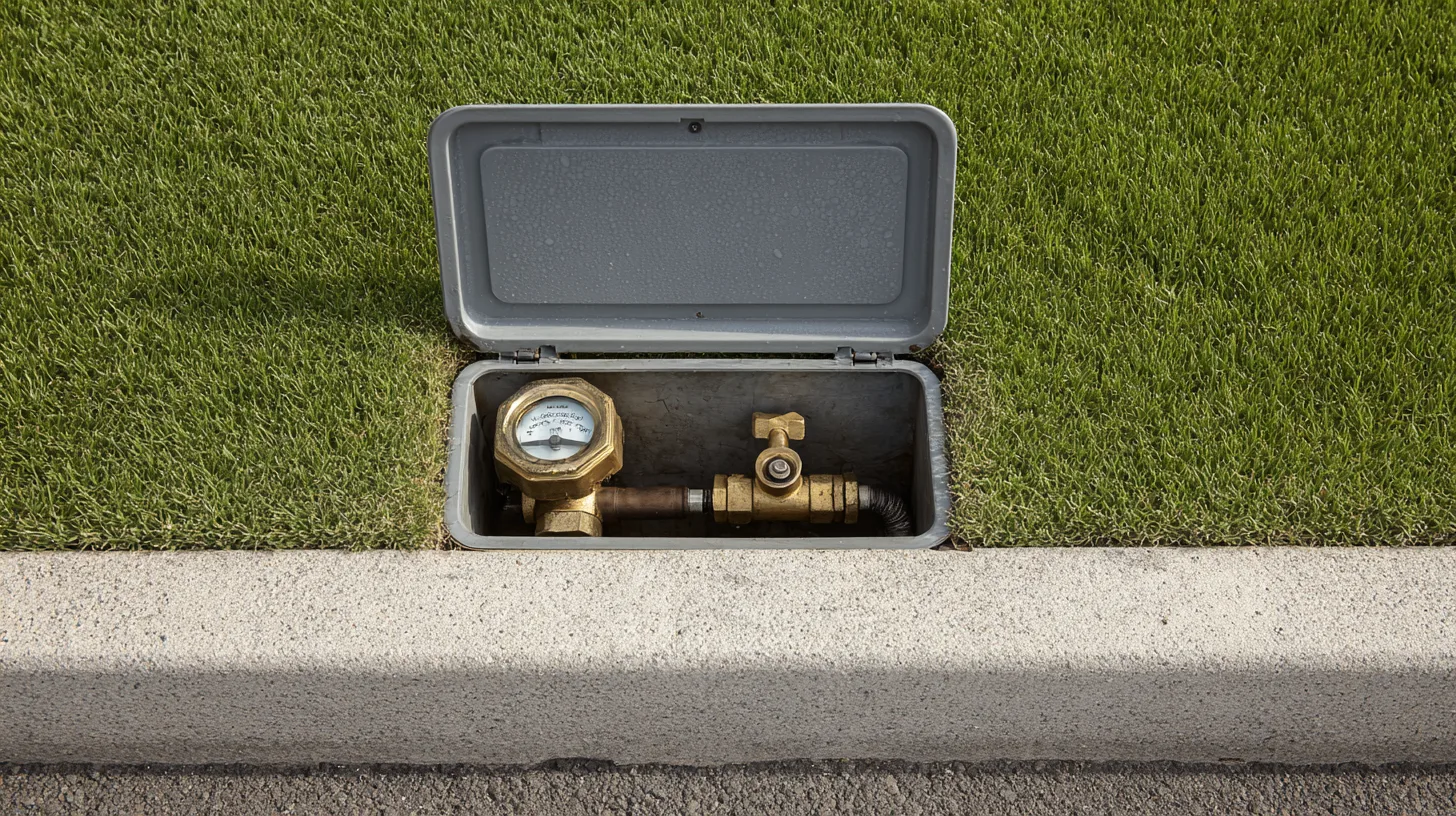
In slab-built Florida homes, look where the main line enters the house: on an outside wall near a hose bib, often on the garage side, sometimes behind an access panel. Homes on wells have a valve at the pressure tank. The meter box near the street holds a second, utility-side stop.
The fastest search pattern: start at the water heater and trace the cold line backward, or walk the exterior wall closest to the street-side meter box. The valve usually sits within a few feet of where the pipe enters the wall. With no basements in Southwest Florida construction, the answer is almost always outside or in the garage.
Once you find it, mark it. A zip tie, a paint dot, a photo on your phone labeled so anyone in the family can find it. The valve you located calmly in August is worth far more than the one somebody hunts for while the ceiling drips.
Gate valve or ball valve: which one you have
A round wheel handle is a gate valve: it closes by screwing a metal gate down across the flow, takes several full turns, and is the type that seizes with age. A lever handle is a ball valve: a quarter turn swings it from open to closed, and it rarely sticks.
The distinction matters because the two fail differently. Gate valves fail quietly: mineral deposits freeze the stem, the gate drops off its stem, or the valve closes but no longer seals. Ball valves mostly just work, which is why plumbers install them as replacements almost universally.
Age is the tell. Homes from the 1990s and earlier usually carry the original gate valve, now decades old. If your main shutoff is a wheel that has not moved since the house was built, treat the test below as overdue rather than optional.
The five-minute annual test
Once a year, on a calm day: close the valve fully, open a faucet and confirm the water stops, then reopen the valve all the way. That is the entire test. It proves the one fact that matters, that the valve actually stops water, and it keeps a gate valve's stem from seizing between emergencies.
Two refinements make the test honest. Watch the lowest faucet in the house rather than the closest one, and give the line a minute to drain before judging; a trickle that dies is a pass. A valve that "closes" while the faucet keeps running has failed the only exam it exists for.
The stakes scale with what failure costs. Water damage and freezing claims averaged $13,954 per claim across 2018 to 2022 (Insurance Information Institute, 2026), and ordinary household leaks already waste 9,400 gallons per family per year (EPA WaterSense, 2026). The test costs five minutes.
When the valve will not turn
Stop at firm resistance. A seized gate valve that is forced can shear its stem or start a leak at the packing nut, converting a dormant problem into an active failure. The right sequence: stop, note which position it is stuck in, and schedule a valve replacement while water still flows.
Do not reach for a wrench or a cheater bar; the handle is the fuse in this system, and breaking it inside the valve is the expensive outcome. Penetrating oil on the stem and gentle back-and-forth sometimes frees a mildly stuck valve, but a valve that fights back has given you its answer.
Replacement at the main is a licensed plumber's job, since it means working against street pressure or coordinating a meter shutoff with the utility. Verify any contractor's license in the state database before the visit (Florida DBPR, 2026). Until the swap, know exactly where the meter-box stop is.
Condos, rentals, and the valves you do not own
In a condo, your unit's shutoff is usually behind an access panel near the water heater, under the kitchen sink, or in a utility closet, and it may stop only your unit. Building mains belong to the association. Renters should ask the landlord to walk the valve location at move-in.
Stacked buildings add one rule: learn what your valve does not stop. A supply failure in your ceiling can originate in the unit above, and the association's emergency line belongs next to yours in your phone. Response in a building is a chain, and your valve is only the first link.
For seasonal homes the calculus shifts again: an empty house cannot report its own leak, which is why closing the main before leaving is standard practice here. Our snowbird shutoff guide covers that departure routine, and the hurricane preparation guide covers the storm version of the same discipline.
This article, answered
The questions readers ask about this topic, answered the way an answer engine would. No forms, no sales pitch.
JAMIE KLONCZ · GREAT HERON PLUMBING ONLINE Pick a question on the left, or search above. You will get the direct answer, the way an answer engine would give it.
PUBLISHED August 22, 2026 · WRITTEN BY JAMIE KLONCZ, FOUNDER · GREAT HERON PLUMBING