
Why Your Naples Water Bill Doubled and Nothing Looks Wet
A high water bill with no leak in sight is not a mystery; it is a search problem, and search problems yield to partitioning. Household leaks are ordinary enough that the EPA's own figure is that "the average family can waste 180 gallons per week, or 9,400 gallons of water annually, from household leaks" (EPA WaterSense, 2026). This guide is the afternoon version of that search: one meter test that splits the problem in half, the two culprits that explain most bills, and the county's own adjustment process, which has a deadline most people learn about too late.

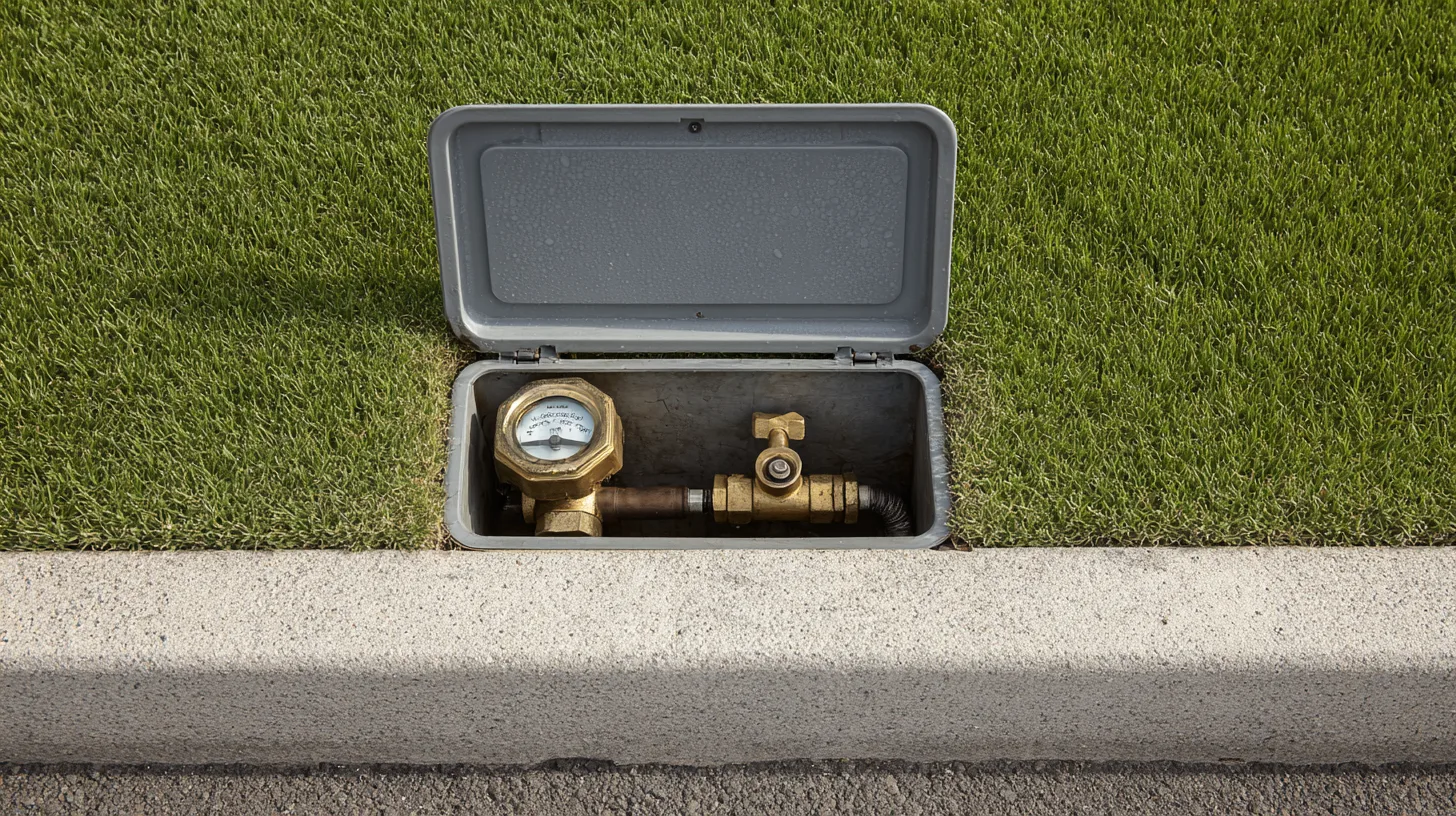
The diagnosis rests on one fact: your water meter is a flow instrument, not just a billing device. With every fixture off, a moving meter means water is leaving the system somewhere, and the pattern of when it moves, with irrigation isolated on or off, with the house valve closed or open, tells you which half of the property is losing it. Everything below is that one idea applied in a specific order.
The two-hour meter test
Turn off every fixture inside and out, note the meter reading and the position of its low-flow indicator, and wait two hours with nothing running. A reading that moved means a leak is live right now. Then repeat the test with the house's main valve closed: if the meter still moves, the loss is between the meter and the house or in irrigation. If it stops, the leak is inside.
That second round is the partition that saves you money, because it divides the property before anyone starts opening walls. Movement with the house valve closed points at the service line or the irrigation system. Movement only with the house valve open points indoors, and the next two sections take the indoor suspects in order of likelihood.
Read the low-flow indicator, not just the digits: the small spinner or triangle registers flows the dials barely show. Our shutoff valve guide covers finding and closing the house valve if you have never touched it, which is itself worth doing before any emergency makes it urgent.
Toilets: the silent culprit
A failed flapper lets water slide from tank to bowl continuously, silently, and around the clock, and it is the most common indoor answer to a doubled bill. The test costs nothing: put a few drops of food coloring in each tank, wait fifteen minutes without flushing, and look for color in the bowl. Color means the flapper is passing water.
Guest bathrooms earn special suspicion in Naples homes. A toilet that sits unflushed for months, in a seasonal home or a spare bath, dries out its rubber, and the leak begins exactly when nobody is there to hear it. Check every toilet, not just the busy ones.
The fix is a flapper or a fill valve, hardware-store parts, and this is honestly a job many homeowners do themselves. What matters for this article is the receipt: keep it, because the county's adjustment process below asks for proof of the repair.
Irrigation: the twelve-month suspect
Outdoor water is the biggest single share of a Florida bill in many homes: nationally, "outdoor water use accounts for more than 30 percent of total household water use, on average," and more in heavy-irrigation regions (EPA WaterSense, 2026). A cracked zone line or a stuck valve loses water underground on a schedule, invisibly, exactly matching a bill that jumped without a puddle.
The signature of an irrigation leak is timing: bills that jumped while the landscape looks normal, a meter that moves with the house valve closed, and sometimes one suspiciously green or spongy strip of lawn along a zone line. Run each zone briefly and walk it; look for heads that barely mist while others gush, and for water surfacing where no head exists.
A stuck zone valve is sneakier: it lets a zone weep continuously rather than on schedule. If the meter moves with the house closed and the irrigation controller off, close the irrigation system's own isolation valve and test a third time. That last split separates the sprinklers from the service line.
When it is the service line or the slab
If the meter moves with the house valve closed and irrigation isolated off, the remaining suspect is the buried service line between meter and house. If the meter moves only with the house open but no fixture explains it, and floors show warm spots or the sound of running water with everything off, the conversation moves under the slab.
These are the two findings that end the do-it-yourself phase, and what you have built by testing in order is exactly what a leak detection visit needs: the pattern of when the meter moves. What moves leak-detection pricing is access and method, whether the line runs under yard or driveway, and whether acoustic or tracer-gas location is needed before anyone digs.
Water damage is the background stakes here: water damage and freezing already generate a property claim in about one in 60 insured homes in an ordinary year (Insurance Information Institute, 2026), and a slab leak found early is a repair while one found late is a restoration. Our slab leak insurance guide, publishing later this week, covers the claim side in full.
Asking the county for a leak adjustment
Collier County Public Utilities runs a Credit Adjustment Request process for leak-driven bills, and its deadline is the detail that matters: the county states the "request must be received within 30 days of the date that the high read is posted to the account" (Collier County, 2026). Wait two billing cycles to investigate and the window is gone.
The documentation requirement is equally specific. For a professional repair, the county asks that a "detailed repair invoice must be included with repair date, service address, and description of repair" (Collier County, 2026); for a do-it-yourself fix, the parts receipt stands in. This is why the flapper receipt and the plumber's invoice belong in your file before you fill out the form.
An adjustment is a request, not an entitlement, and the county decides it. What you control is moving fast once the high read appears, fixing the leak, and submitting paperwork that matches what the form asks for. Diagnose in week one, repair in week two, file immediately.
This article, answered
The questions readers ask about this topic, answered the way an answer engine would. No forms, no sales pitch.
JAMIE KLONCZ · GREAT HERON PLUMBING ONLINE Pick a question on the left, or search above. You will get the direct answer, the way an answer engine would give it.
PUBLISHED August 31, 2026 · WRITTEN BY JAMIE KLONCZ, FOUNDER · GREAT HERON PLUMBING