
How Long a Water Heater Really Lasts in Hard Water, and What Cuts It Short
Ask three plumbers about water heater lifespan in hard water and you will hear three different numbers, because the honest answer is a range that your water chemistry moves. InterNACHI's standard life expectancy chart puts conventional tank heaters at 6 to 12 years (InterNACHI, 2026), and hard water is one of the main reasons a given tank lands at the bottom of that range instead of the top. This article covers what actually ends a tank's life, how hard water accelerates it, and the two maintenance habits that push the number the other way.

Water heater lifespan is how long the unit runs before the tank itself fails, not before a part fails. Valves, elements, and thermostats are replaceable; a corroded tank is not. Hard water shortens tank life through scale: dissolved calcium and magnesium come out of solution when water is heated and settle as mineral deposits that bury the heat source and speed the consumption of the rod that exists to protect the steel.
The lifespan numbers worth trusting
InterNACHI's standard life expectancy chart lists conventional water heaters at 6 to 12 years (InterNACHI, 2026). ENERGY STAR credits tankless units with "a life expectancy of 20 years, much longer than any conventional tank-type water heater" (ENERGY STAR, 2026). The width of the tank range is the honest part: water chemistry and maintenance decide where inside it your unit lands.
Ranges that wide frustrate people shopping for a straight answer, but they reflect how tanks actually die. A tank in soft water, flushed regularly, with its anode rod replaced on schedule, can run past the top of the chart. The same model in hard water, never flushed, can fail at the bottom of it. The spread is not manufacturing variance. It is treatment.
The 6 to 12 figure also explains why tank warranties track the low end of the range rather than the high end. Manufacturers price warranties against the water conditions they cannot control, which tells you what they believe the controlling variable is. Southwest Florida, where water rises through limestone before it ever reaches a treatment plant, sits on the wrong side of that variable.
What actually ends a tank's life
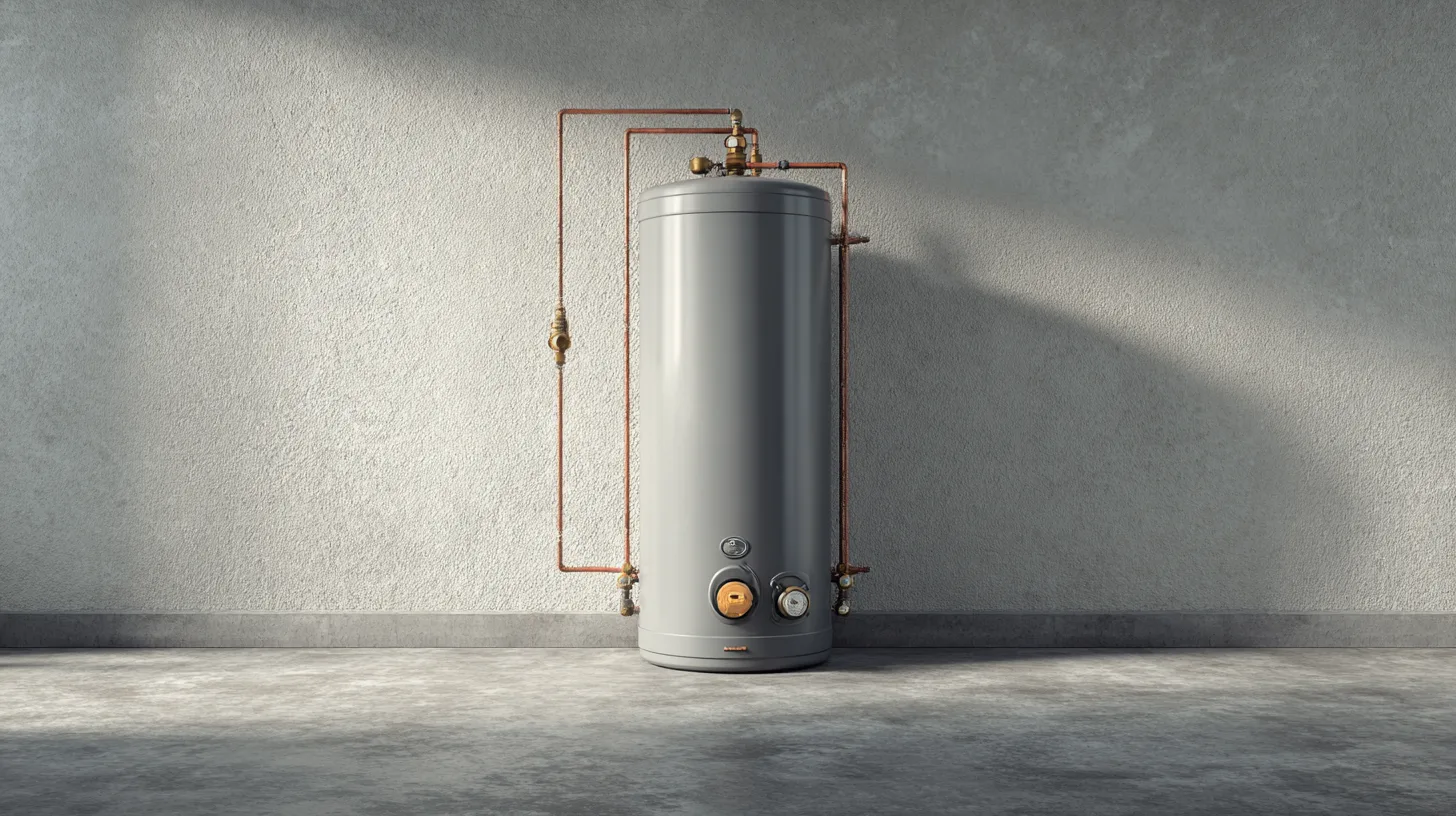
Two processes kill tanks: corrosion of the steel shell and sediment burial of the heat source. The anode rod, a sacrificial metal bar inside the tank, corrodes in place of the steel until it is consumed; once it is gone, the tank rusts on the clock. Sediment does its damage sooner, insulating the burner or elements so the unit works harder to heat the same water.
The anode rod is the part almost nobody has heard of and the part that decides the tank's fate. It is designed to be inspected and replaced, but it sits under a hex head on top of the tank that is rarely touched after installation day. A consumed anode does not announce itself. The first symptom is usually rusty water or a leak, and both arrive after the protection ended.
Sediment is more visible in daily life: rumbling and popping as water flashes to steam under the mineral blanket, longer recovery times, higher energy bills. On electric units the lower element can burn out early when it is buried. None of this is mysterious once you know the mechanism, which is why the maintenance section below is short.
What hard water changes, and how to read your own number
The USGS is direct about the mechanism: "When hard water is heated, such as in a home water heater, solid deposits of calcium carbonate can form. This scale can reduce the life of equipment, raise the costs of heating the water, lower the efficiency of electric water heaters, and clog pipes" (USGS, 2026). Hard water compresses every interval in this article.
You do not have to guess your hardness. The USGS classifies water at 0 to 60 milligrams per liter of calcium carbonate as soft, 61 to 120 as moderately hard, 121 to 180 as hard, and more than 180 as very hard (USGS, 2026). Your utility publishes its measured number every year in its water quality report, usually in a table alongside other secondary standards.
Find that row, compare it to the scale, and you know which end of the lifespan range your heater is being pushed toward. Harder water means sediment accumulates faster and the anode is consumed sooner, so the same maintenance buys more years here than it would in a soft water city.
The two maintenance habits that move the number
Two habits do most of the work: flushing sediment out through the drain valve and replacing the anode rod before it is fully consumed. Our practice in hard water areas is to flush annually and to pull the anode for inspection every two to three years, more often if the last one came out mostly gone.
The flush is the cheaper habit and the one worth learning yourself. Water heaters carry a drain valve at the base precisely so sediment can leave; attach a hose, run it to a drain, and let the tank push the loose mineral out. The first flush on a neglected tank in hard water can be dramatic. The tenth is boring, which is the goal.
The anode is the habit that changes the ending. Replacing a consumed rod costs a fraction of a tank and restores the corrosion protection the tank was designed around. One honest caveat: on an older tank that has never been serviced, a first aggressive cleaning can expose weaknesses the sediment was masking. If the tank is already near the end of the chart, put the effort into the replacement decision instead.
Repair or replace: the year eight conversation
ENERGY STAR's replacement guidance sets the threshold at a decade: a heater more than 10 years old is due for a planned replacement decision "before you're left with an emergency decision" (ENERGY STAR Experts, 2026). Sudden failure takes your options with it, and in hard water the same logic simply arrives a couple of years earlier.
Age and symptom decide together. A five year old heater with a failed thermostat is a repair. A ten year old heater with rusty hot water is a tank on notice, and money spent repairing around a corroding tank is spent twice. ENERGY STAR adds that an emergency replacement "can be more expensive" and tends to limit your options to inefficient models with high operating costs (ENERGY STAR Experts, 2026).
Planned replacement is also the only moment the tankless question is genuinely open. ENERGY STAR credits tankless units with a 20 year life expectancy (ENERGY STAR, 2026), and hard water is a good argument for weighing that comparison calmly rather than under emergency pressure. Our water heater replacement guide covers the decision in full, including what Florida garages change about it.
This article, answered
The questions readers ask about this topic, answered the way an answer engine would. No forms, no sales pitch.
JAMIE KLONCZ · GREAT HERON PLUMBING ONLINE Pick a question on the left, or search above. You will get the direct answer, the way an answer engine would give it.
PUBLISHED August 17, 2026 · WRITTEN BY JAMIE KLONCZ, FOUNDER · GREAT HERON PLUMBING