
Tank or Tankless: Choosing Your Next Water Heater
The tank vs tankless water heater debate is usually argued as a technology contest, and that is why so much of it is useless: the right answer is decided less by the heater than by the house it is going into. A tankless unit carries a life expectancy of 20 years, much longer than any conventional tank-type water heater (ENERGY STAR, 2026), but reaching that number depends on your gas line, your electrical panel, your water chemistry, and when the question is being asked. This guide compares the two honestly, then gives the decision rules we actually use.

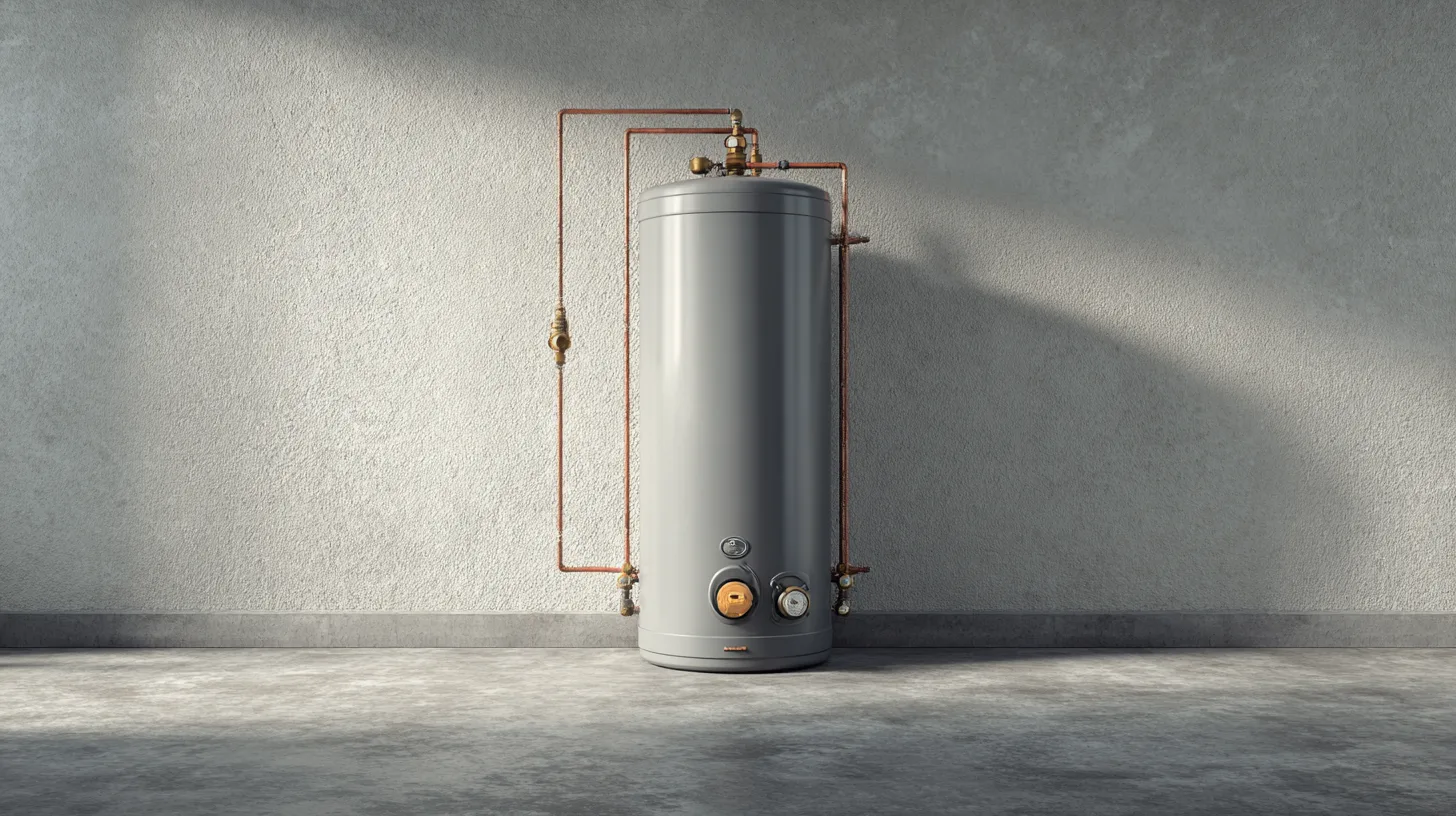
A tank water heater stores and continuously reheats a reservoir of hot water, typically in a Florida garage. A tankless water heater heats water only as it flows through the unit, which is why it is also called on-demand: no storage, no standby reheating, and no running out mid-shower, in exchange for higher demands on the fuel supply feeding it. Both are mature, reliable technologies. The comparison below is about fit, not virtue.
How each one actually works
A tank buys hot water ahead of demand and keeps it warm until used, so its limits are capacity and recovery: how much is stored and how fast it reheats. A tankless buys hot water at the moment of demand, so its limit is flow: how many fixtures it can serve at once. Neither limit is a defect. Each is the price of the design.
The practical difference shows up at the extremes. A houseful of guests can drain a tank and then wait on its recovery; a tankless never runs out but can be overwhelmed in the moment if two showers and a washing machine all demand flow at once. Which failure mode annoys your household less is a genuinely personal question.
The lifespans also differ by design, not luck. InterNACHI's life expectancy chart puts conventional tanks at 6 to 12 years (InterNACHI, 2026), while ENERGY STAR credits tankless units with 20 (ENERGY STAR, 2026), largely because there is no steel reservoir standing full of hot water for a decade with a sacrificial rod as its only defense.
The comparison at a glance
The honest summary: tanks win on upfront simplicity, replacement speed, and indifference to the house's fuel and electrical constraints. Tankless wins on lifespan, space, standby losses, and endless hot water. The tiebreakers are the house itself and the timing of the decision, which is why the two rows that matter most are retrofit demands and when you are deciding.
| Factor | Tank | Tankless |
|---|---|---|
| Lifespan | Conventional tanks run 6 to 12 years (InterNACHI, 2026) | Life expectancy of 20 years (ENERGY STAR, 2026) |
| Hot water delivery | Fixed reserve, then recovery time | Continuous, limited by flow rate at the moment |
| Space | Full tank footprint, usually in the garage | Wall-mounted, roughly a suitcase |
| Retrofit demands | Drops into the existing connections | Often needs gas line, venting, or electrical work first |
| Standby losses | Reheats stored water around the clock | None; heats only on demand |
| Hard water maintenance | Annual flush plus anode inspection | Periodic descaling of the heat exchanger |
| Replacement timing | Same-day like-for-like swap is routine | A planned project, not an emergency decision |
Read the table bottom-up and the pattern appears: the tank's advantages cluster around the emergency replacement, and the tankless advantages cluster around the planned one. That is the real axis of this decision, and it is why ENERGY STAR's guidance to start the replacement conversation past year 10, before a failure forces it (ENERGY STAR Experts, 2026), matters more here than any spec row.
Retrofit reality: what nobody quotes until the site visit
Tankless units concentrate the same heating work into the moment of use, so they demand more from the house at that moment: a gas unit often needs a larger gas line than the tank used and its own venting path, and a whole-house electric unit can draw more amperage than an older panel has to spare. These are solvable, but they are the real cost gap.
This is the conversation that decides most retrofits. The heater's price tag is public; the gas line upsizing, the vent run, or the panel work that a specific house needs is not, and it can rival the unit itself. It is also why quotes for the same tankless model vary wildly between houses: the difference is the house.
Florida softens the picture in one useful way: outdoor-rated tankless units are common here, and mounting outside can eliminate the vent run entirely. Gas piping is regulated separately from general plumbing, so confirm the license scope of whoever touches it, and verify any contractor in the state database first (Florida DBPR, 2026).
The operating cost truth
The efficiency gap is real and modest: ENERGY STAR's own figure is that a certified tankless saves a family of four $95 per year, or $1,800 over its lifetime, on gas bills compared to a standard gas storage model (ENERGY STAR, 2026). That pays for the technology over 20 years. It does not, by itself, pay for a difficult retrofit.
This is where we depart from both camps of internet advice. The tankless-always camp sells the savings without the retrofit math; the tank-always camp prices the retrofit without the lifespan. Run both numbers for your actual house: savings plus one avoided tank replacement over 20 years is the honest tankless case, and on an easy retrofit it is often a winning one.
Water chemistry belongs in the same math. In harder water, a tank's life shortens and a tankless needs regular descaling to protect its heat exchanger, so maintenance is not optional for either. Our water heater lifespan guide covers how to read your own hardness number and what it does to each design.
Choose-one-if: the decision rules
Choose a tank if the heater is already failing, the budget is fixed, or the house needs panel or gas work you are not ready to buy. Choose tankless if you are deciding ahead of failure, gas is available or an outdoor install fits, space matters, and you plan to own the house long enough for a 20 year design life to pay you back.
The timing rule outranks the technology rules. A tankless conversion chosen calmly is a good project; the same conversion attempted during a cold-shower emergency compresses engineering into a bad afternoon, and an emergency replacement tends to limit your options to inefficient models with high operating costs (ENERGY STAR Experts, 2026). If your tank is past year 10, decide now, while both answers are still available.
And one honest tiebreaker: a like-for-like tank swap is never a wrong answer. It restores hot water the same day and defers the tankless question to a calmer moment. What is a wrong answer is replacing a failed tank in a panic and wondering for the next decade what the other road cost.
This article, answered
The questions readers ask about this topic, answered the way an answer engine would. No forms, no sales pitch.
JAMIE KLONCZ · GREAT HERON PLUMBING ONLINE Pick a question on the left, or search above. You will get the direct answer, the way an answer engine would give it.
PUBLISHED August 28, 2026 · WRITTEN BY JAMIE KLONCZ, FOUNDER · GREAT HERON PLUMBING