
What Your Water's Smell Is Telling You: Chlorine, Sulfur, and Sewer Gas Decoded
A smell is a diagnosis if you read it in the right order, and the order has three questions: which smell, which fixture, and hot or cold. Most plumbing smells are harmless and self-explaining once you cross those axes, and a few mean call now. The trap is treating them all the same, or reaching for a filter when the answer is a fifteen-minute test. This guide decodes the three smells that account for nearly every call, with a matrix you can read against your own tap.

Water and drain smells fall into three families with three different origins. Chlorine or bleach smell comes from the disinfectant the utility adds, sometimes turned up during scheduled maintenance. Rotten egg or sulfur smell is hydrogen sulfide gas, and where it appears tells you whether it started in your water heater or the source. Sewer gas is not a water smell at all; it comes from the drain, and it means a barrier that should be sealed is open.
The isolation test: which faucet, which temperature
Before naming a smell, locate it. Run cold at one tap, then hot, then check a second faucet across the house. A smell in hot water only points at the water heater. A smell in both hot and cold at every tap points at the incoming supply. A smell only at one drain, with the water itself clean, points at that drain, not your water.
This three-part test does the same job for smells that the meter test does for a high bill: it partitions the problem before you spend a dollar. Hot-only, everywhere, or one-drain are three different repair conversations, and the nose tells them apart in two minutes.
Fill a glass at the tap and step away from the sink to smell it, because sink and drain odors contaminate the test. If the water in the glass is odorless once you leave the basin, the smell was never in the water; it was rising from the drain, and the last section covers that.
The matrix: smell, location, and what it means
Cross the smell against where it shows up and the cause resolves. Chlorine in all water is treatment. Rotten egg in hot water only is the water heater. Rotten egg in all water points upstream to the source or softener. Sewer gas at a drain is a dry trap or a venting fault. The table below is the same logic in one view.
| Smell | Where | Most likely cause | What to do |
|---|---|---|---|
| Chlorine / bleach | Hot and cold, every tap | Utility disinfectant, stronger during a scheduled free-chlorine conversion | Normal; the county states the water stays safe to drink (Sarasota County, 2026). Run cold a minute or chill it |
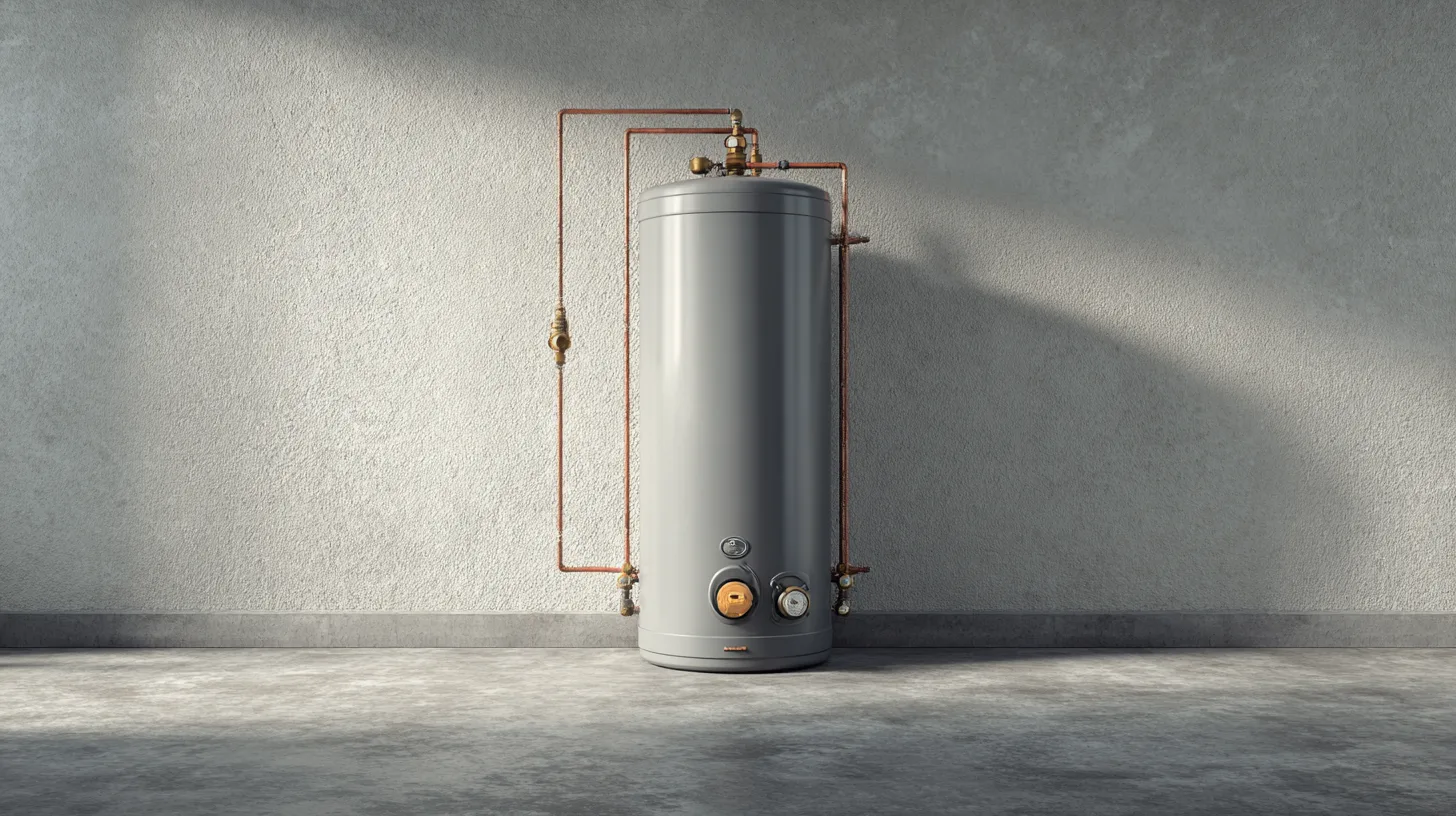
| Rotten egg / sulfur | Hot water only | The water heater anode reacting with sulfate (Minnesota Department of Health, 2026) | Swap the magnesium anode for aluminum; flush and raise temperature to clear bacteria |
| Rotten egg / sulfur | Hot and cold | Hydrogen sulfide or sulfur bacteria in the source or softener | Test the source; a private well needs its own treatment path |
| Sewer gas / musty | At one drain, water clean | A dried-out trap or a blocked vent | Run the fixture to refill the trap; if it persists, the vent needs a look |
Read the matrix as a decision tool, not a reference: find your row by answering the isolation test above, and the last column is the next action. The two rotten-egg rows are the ones people confuse, and getting them apart saves an unnecessary heater service or an unnecessary water test.
One row is missing on purpose: a chlorine smell in one fixture only, not across the house, usually means a stagnant branch line rather than a treatment change, and running that fixture hard for a few minutes resolves it. The matrix covers the smells that recur; a one-off odor after a week away is almost always stagnation clearing, not a fault worth a service call.
Chlorine, and the annual burnout
A stronger chlorine smell is usually the utility doing scheduled maintenance. Southwest Florida systems periodically switch from chloramine to free chlorine to clean the distribution mains, which Sarasota County describes as disinfecting "with only chlorine rather than chlorine combined with ammonia" to clean the system as recommended by the state (Sarasota County, 2026).
During that window the smell is expected and temporary. The county is direct that "you may notice a change in the taste, color, and smell of the water during this process," that the water stays safe, and that boiling is not necessary (Sarasota County, 2026). Collier County's baseline the rest of the year is chloramine plus a corrosion inhibitor (Collier County, 2026), a milder smell than free chlorine.
If the smell bothers you, it clears the way it arrives: run the cold tap a minute, or keep an open pitcher in the fridge so the chlorine dissipates. Two households need to act rather than wait, and both appear on the utility's own notices: aquarium keepers and home dialysis patients, whose equipment is sensitive to the disinfectant change.
Rotten egg in hot water only: the anode story
A rotten-egg smell in hot water alone is almost never the source; it is a reaction inside the water heater. The Minnesota Department of Health explains the mechanism: the heater's anode "is usually made of magnesium metal, which can supply electrons that aid in the conversion of sulfate to hydrogen sulfide gas" (Minnesota Department of Health, 2026).
That is why the fix is at the heater, not the whole house. The same source notes a replacement anode "made of a different material, such as aluminum, can be installed" and "may provide corrosion protection without contributing to the production of hydrogen sulfide gas" (Minnesota Department of Health, 2026). The anode still protects the tank; it just stops feeding the smell.
A warm tank can also host sulfur bacteria, so the repair is usually a pair: swap the anode and flush the tank, sometimes with a temporary temperature raise to clear the bacteria. Our water heater lifespan guide covers the anode as the part that decides a tank's life, and this is the same rod doing a second job you can smell.
Sewer gas at the drain: traps and vents
Sewer gas is the one smell that is not in your water at all. Every drain holds a U-shaped trap of water that seals sewer gas out of the room. When that seal is missing, the gas rises. The two causes are a trap that dried out from disuse and a vent that cannot let the system breathe, and they are told apart by whether running water fixes it.
The dry-trap case is common in Florida second bathrooms, guest showers, and floor drains that sit unused for weeks in a seasonal home: the trap water simply evaporates and the seal opens. Run the fixture for a minute to refill it, and the smell usually goes with the next flush. A capful of mineral oil down a rarely-used floor drain slows the next evaporation.
If the smell returns after the trap is full, the problem is the vent, the pipe that lets the drain system equalize pressure so traps are not siphoned dry every time something drains. A blocked or damaged vent is a roof-and-wall job, not a plunger job, and persistent sewer gas after refilling traps is the signal to have it looked at rather than lived with.
This article, answered
The questions readers ask about this topic, answered the way an answer engine would. No forms, no sales pitch.
JAMIE KLONCZ · GREAT HERON PLUMBING ONLINE Pick a question on the left, or search above. You will get the direct answer, the way an answer engine would give it.
PUBLISHED September 2, 2026 · WRITTEN BY JAMIE KLONCZ, FOUNDER · GREAT HERON PLUMBING