- I have no water in Golden Gate. Who do I call?
That depends on whether the property is on the county system or on a private well. Golden Gate was sold in 1960 with no public utilities (ActiveRain, 2026) and connection was allowed but not required after the county acquisition in 2018 (Collier County Public Utilities, 2026). On a well there is no outage to report — the pump, pressure tank, switch or power supply is on your property.
- What should I check first on a well system?
Whether the breaker for the pump has tripped, and whether the pressure tank is holding pressure. Those are the two most common and least expensive causes, and both are quick to rule out before anything is dismantled.
- Is a sewage backup here the county's problem?
Only if the property is connected to the county system. On septic there is no main to fail: the cause is the line to the tank, the tank itself, or the drainfield, and all three are the property owner's.
- What are the first checks when a well delivers no water?
Power, then pressure, then the pump. Start at the breaker panel, because a tripped breaker for the well pump is the most common cause and the cheapest to resolve. Then look at the pressure gauge on the tank: a reading of zero with the pump running points at a suction or pump problem, while a normal reading with no flow at the tap points downstream of the tank. Listen for the pump attempting to start — a hum without water movement suggests a seized pump or a failed capacitor rather than a supply problem. These three checks take minutes, need no tools, and they determine whether you are describing an electrical fault, a pressure system fault or a pump failure when you call.
- What is a pressure tank and why does it fail?
It is the vessel that stores pressurised water so the pump does not start every time a tap opens. Inside is a bladder separating water from a charge of air, and that air charge is what provides the pressure between pump cycles. When the bladder fails or the charge is lost, the tank no longer buffers demand and the pump starts and stops rapidly instead — which is both the symptom and the mechanism that destroys pumps. Short cycling is therefore the warning worth acting on. A pump replaced without correcting the tank that caused the cycling will fail again on a predictable schedule, and the household will reasonably conclude the new pump was faulty.
- How does sewage backing up differ on septic?
There is no main to fail and no utility to report it to, which changes both the diagnosis and the responsibility. On a municipal connection a backup may be a surcharge in the public main, particularly during heavy rain, and that is somebody else's system. On septic the cause is on your property: the line to the tank, the tank itself, or the drainfield. The diagnostic sequence runs outward from the house — check whether one fixture or all of them, then whether the tank is due for pumping, then whether the ground above the drainfield is saturated. Each answer points to a different trade and a different cost.
- What should a Golden Gate property owner have ready?
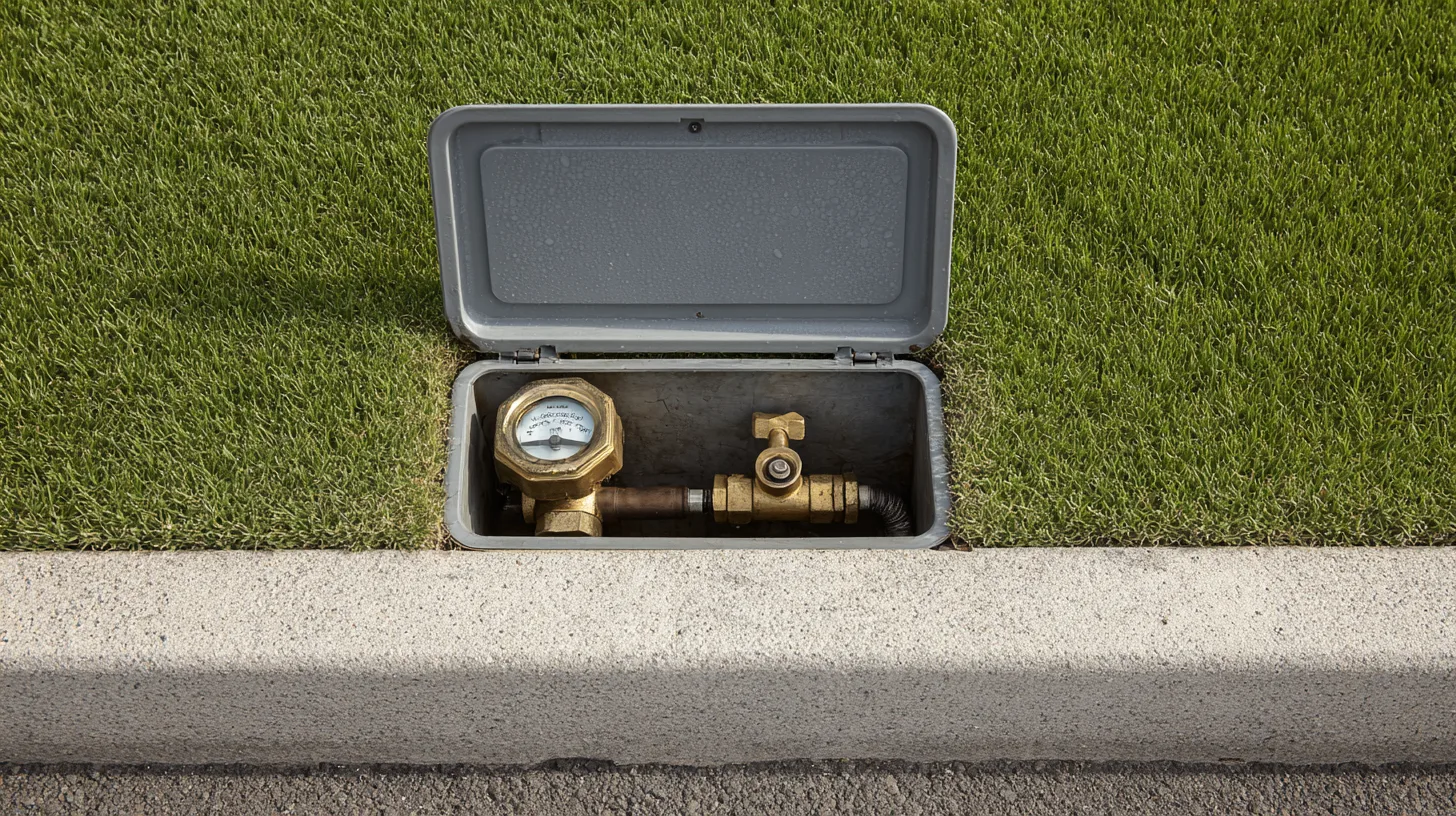
Four things, none of which take long to establish and all of which are useless to find during an emergency. Where the main shutoff is, and whether it turns. Where the well head, pressure tank and breaker are, since those are the components an emergency will involve. Where the septic tank access lids are and when it was last pumped. And whether the property is on county sewer or its own system at all — because after the 2018 county acquisition allowed connection (Collier County Public Utilities, 2026) while Golden Gate Estates residents were never required to (Collier County, 2026), that is genuinely not obvious from the property itself.
- Is a generator worth it for the plumbing alone?
On a well property the argument is stronger than most people realise. A municipal supply keeps delivering water during a power cut because the pressure is maintained elsewhere. A well delivers nothing without electricity — no water for drinking, washing or flushing — so a power outage on a well property is a water outage as well. In a region where storm-related outages are routine, that changes a generator from a comfort item to a utility one. It does not need to run the house; it needs to run the well pump, and sizing for that specific load is considerably cheaper than sizing for whole-house backup.
- What does a well and septic property cost to run compared with county service?
There is no monthly utility bill for water or sewer, which is the visible saving and the one people quote. Against that sit periodic tank pumping, pump and pressure tank replacement on their own cycles, water testing, and any treatment equipment the well chemistry requires. Those costs are lumpy rather than monthly, which makes them easy to underestimate — a household can go years with no expense and then meet a pump and a pumping in the same season. The honest framing is that private systems trade a predictable monthly charge for irregular capital costs, and the total over a decade is closer than either side of the argument usually suggests.
- What happens to a well during a power outage?
Nothing pumps, so nothing arrives. The pressure tank holds a modest reserve — typically enough for a few minutes of normal use rather than a day — and once that is drawn down there is no water at any fixture until power returns. That includes flushing, which is the consequence households notice fastest. Filling containers before a forecast storm is the simple mitigation and it costs nothing. The larger mitigation is a generator sized for the pump, which on a well property is arguably the most useful circuit to back up, because it restores water rather than convenience.
- Can a septic system fail because of a storm?
Yes, and by a mechanism that surprises people. A drainfield disperses liquid into surrounding soil, and that only works if the soil can accept it. After sustained heavy rain the ground is already saturated, so the field has nowhere to discharge and the system backs up toward the house — with nothing wrong with the tank, the line or the field itself. It resolves as the ground drains. The practical response is to reduce water use during and immediately after heavy rain rather than to call for emergency clearing, because there is no blockage to clear and the visit will find nothing.
- What should you not do during a backup on septic?
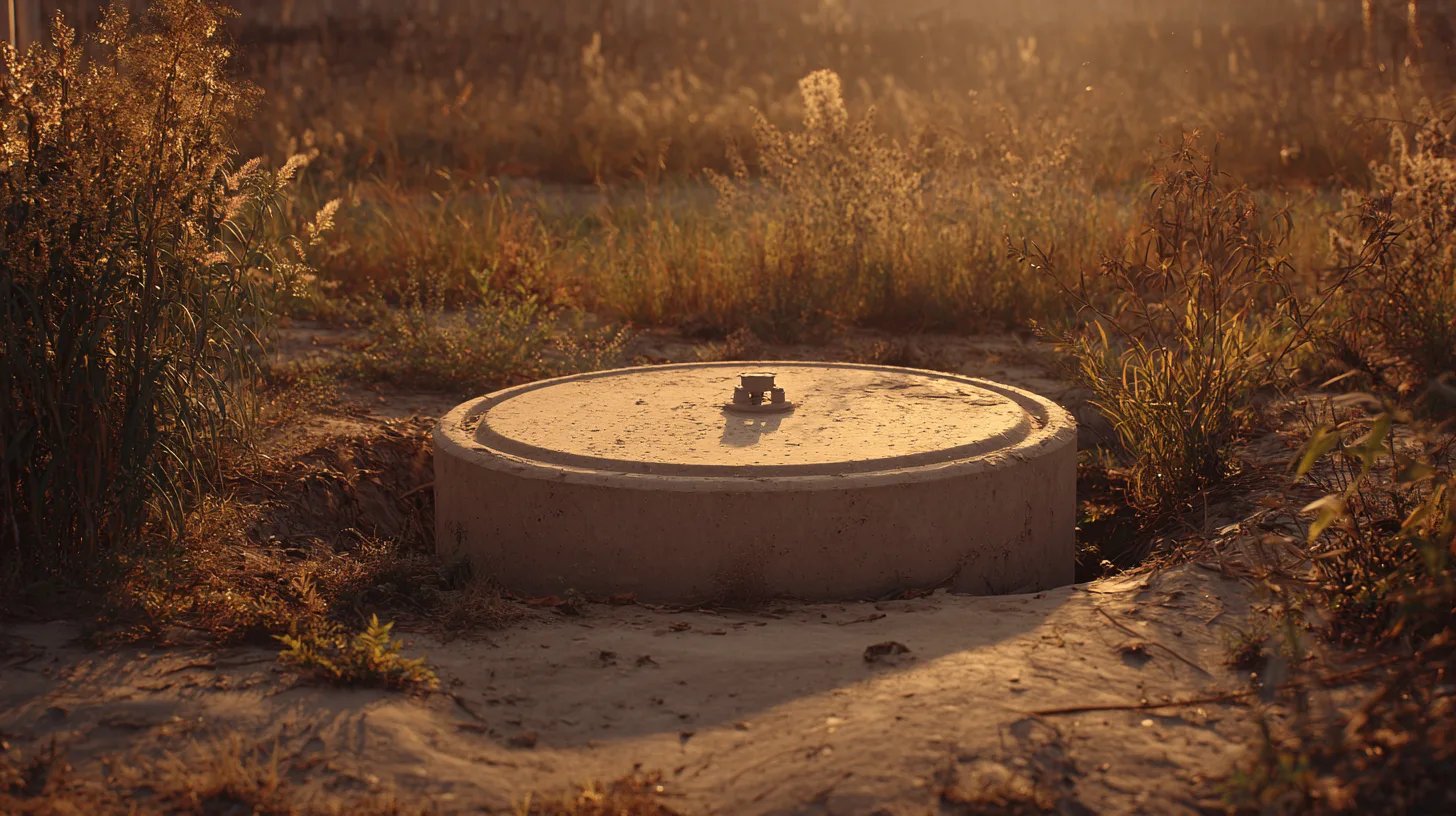
Do not add water, which is the instinct and the wrong one. Every flush, shower and appliance cycle sends more into a system that has already indicated it cannot take it, and on a closed system there is nowhere else for it to go. Do not use chemical products, which do nothing for a full tank and are actively unhelpful to the bacterial process the tank depends on. And do not open the tank yourself — septic tanks contain gases that are genuinely dangerous in confined spaces, and this is one of the few plumbing situations where the DIY inclination should be resisted entirely.
- What is the realistic response time out here?
Longer than in the compact coastal neighborhoods, and it is worth being honest about that rather than promising otherwise. Golden Gate Estates covers a substantial area east of the developed coast, and travel time from anywhere on the coastal strip is genuine. That reality is exactly why the preparation on this page matters more here: knowing where your shutoff is, having a generator sized for the pump, and understanding whether a symptom is a line, a tank or a field problem all reduce what depends on somebody else arriving quickly. On a property this far out, self-sufficiency in the first hour is worth more than a shorter promised arrival.
- What should you have on hand?
Water stored for a day, because on a well an outage is a water outage. A working torch and knowledge of where the breaker panel, pressure tank and well head are. The location of the septic access lids, marked so they can be found in the dark. And the number of a septic contractor as well as a plumber, since half the emergencies on a property like this belong to one and half to the other. None of that is expensive and all of it is considerably easier to arrange on a Tuesday afternoon than during the event it is for.
- What counts as an emergency on a private system?
Sewage entering the house, no water where somebody depends on it, and anything involving standing water near electrical equipment — the well pump and pressure system in particular. Those get attention immediately. What frequently does not need an emergency response is a single slow fixture, a backup that arrived with heavy rain and is easing as the ground drains, or no hot water. The distinction matters more here because after-hours work runs 1.5 to 2 times standard on a weeknight and higher at weekends (Nearby Hunt, 2026), and on an Estates property the travel component is real. Containing a situation and calling on Tuesday is frequently both cheaper and no worse.
- What if the well water suddenly looks or smells different?
Treat it as a stop-using situation until it is understood, because on a private supply there is no utility monitoring it for you. Sudden cloudiness, discolouration or a new smell can indicate a failing well seal, surface water entering, a pump drawing air, or a change in the aquifer after heavy rain. None of those is diagnosable by appearance. Bottled water for drinking and cooking until the supply is tested is the sensible interim, and a test is the only thing that actually answers it. On the county system the annual water quality report gives a published baseline (Collier County Water Sewer District, 2024); on a well there is no equivalent and testing is the whole answer.
- Is there anything that makes an emergency less likely out here?
Three habits do most of it. Knowing where every shutoff and access point is, and confirming the valves turn, so that containment does not depend on searching. Keeping the tank on a measured interval rather than waiting for symptoms, since a tank with capacity absorbs a bad week and a full one does not. And having power for the well pump, because the most common Golden Gate emergency is not a burst pipe — it is a storm outage that leaves a household with no water at all. None of the three is expensive and all of them are considerably easier arranged in advance.
- What is the one preparation worth doing today?
Confirm the main shutoff turns, and if the property is on a well, confirm you know where the pump breaker is. Those two take five minutes together and they are the difference between containing a situation and watching it. Everything else on this page is worth doing; those two are worth doing before anything else.
- How does distance affect what you should do first?
It raises the value of everything you can do yourself before anyone arrives. On a coastal property a fast response substitutes for preparation; on an acreage property east of the developed coast it does not, because travel time is real regardless of who you call. That makes containment — closing the main, killing power to affected equipment, stopping water use on a backing-up system — the part that actually determines the outcome. The call matters; what happens in the twenty minutes before it is answered matters more out here than almost anywhere else in the service area.

 JAMIE KLONCZ · GREAT HERON PLUMBING ONLINE