
Why Collier County Wants Your Backflow Preventer Tested, and What the Letter Means
A backflow test letter reads like bureaucracy until you know what it is protecting. Collier County's own definition is the place to start: "Backflow is a reversal of the flow of water through a cross-connection, pulling undesirable water into the drinking water supply system" (Collier County, 2026). The device in your yard is the one-way door that prevents that reversal, the letter is the utility checking that the door still works, and behind the letter sits a state rule with real teeth. Here is the whole chain, decoded.

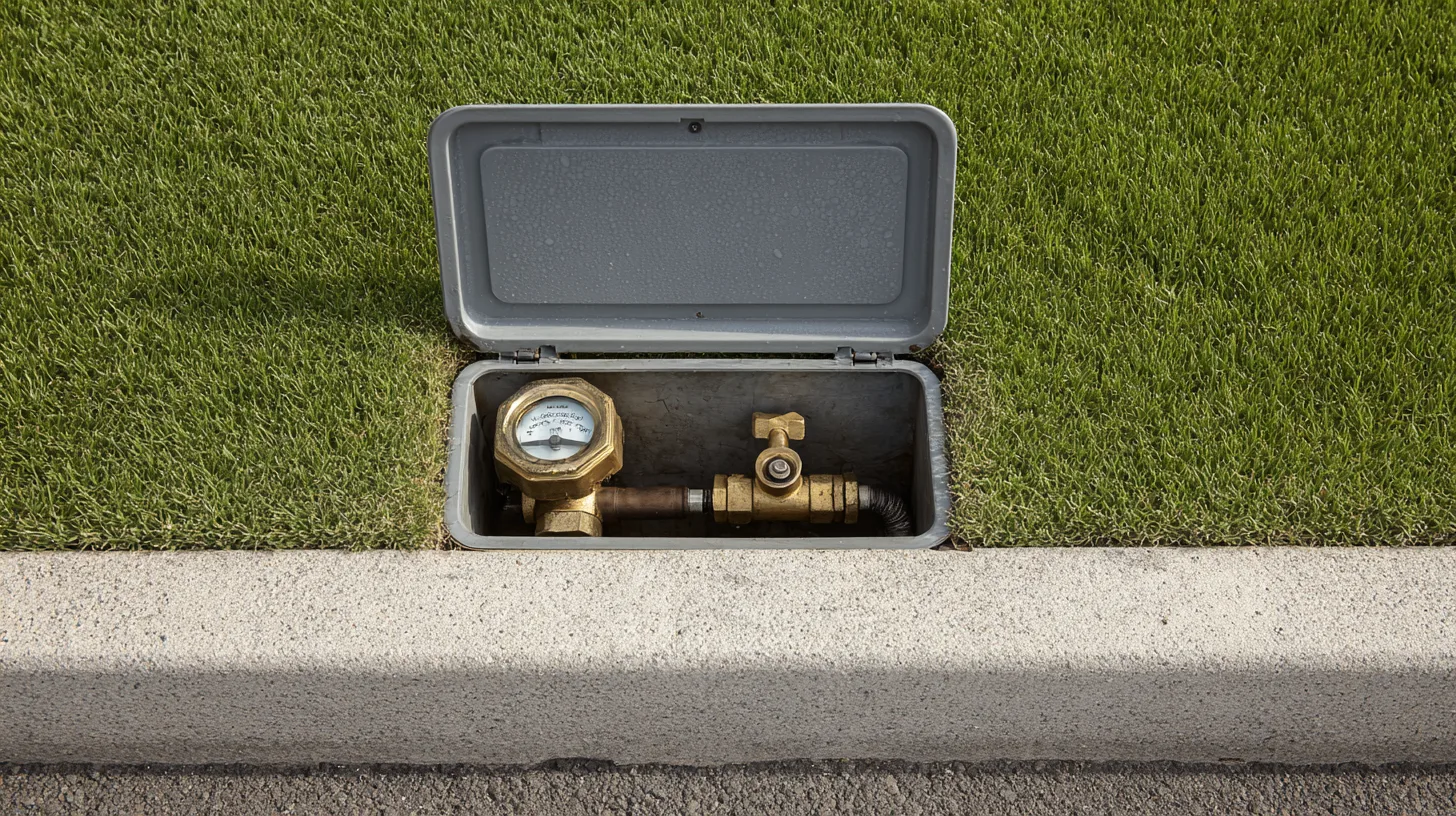
A backflow preventer is a mechanical assembly, usually the U-shaped pipe standing near your meter, that lets water flow into your property but never back out into the public supply. The letter you received is part of the county's cross-connection control program: a notice that your device is due for its periodic test by a certified tester, with the results reported back to the utility. It is not a solicitation, and the deadline printed on it is the one that governs.
What backflow actually is, and why the county cares
The risk is a pressure reversal. A main break or a big draw, like hydrant use, can drop pressure in the street and siphon water backward from private property into the drinking supply. A cross-connection is any point where that could happen: the county defines it as "any connection between the potable (drinking) water supply and any other source of water" (Collier County, 2026).
The county's own example is disarmingly ordinary: "without the proper vacuum breaker installed, leaving a garden hose submerged in a swimming pool is a cross-connection" (Collier County, 2026). Pool water, irrigation lines dosed with fertilizer, and boat docks all sit one pressure reversal away from the tap, which is why the program exists.
Your preventer is the engineering answer, and like any mechanical check it can wear, stick, or fail silently while looking fine from the outside. That is the entire logic of periodic testing: the device only matters on the day the pressure reverses, and nobody gets advance notice of that day.
The letter: what it requires, and the deadline that governs
The letter asks for one thing: a passing test of your assembly, performed by a certified tester, reported to the utility by the deadline printed on the notice. That printed date is the one that matters; reminder and final-notice windows vary, so treat the first letter as the cheap step and the calendar as real.
What gives the paper its weight is the state rule standing behind it, which the county quotes directly: "Florida Administrative Code 62-555.360(3) states that, upon discovery of a prohibited cross-connection, the Water Department shall either eliminate the cross-connection by installing an appropriate backflow prevention device or shall discontinue service until the contaminant source is eliminated" (Collier County, 2026).
Discontinued service is the far end of the escalation, not the first step, but it is written into the code rather than into county discretion. The practical reading: a test appointment now is the least expensive interaction you will ever have with this program.
Who can test it, and how to verify them
Backflow testing is certified work: the tester calibrates gauges against the assembly's check valves and relief ports and files the results with the utility. Before booking anyone, verify the license behind the truck in the state's public database (Florida DBPR, 2026), and ask directly whether they file the paperwork with the county or hand it back to you.
The filing question matters more than it sounds. A passing test that never reaches the utility is, from the program's point of view, no test at all, and follow-up letters go to you, not the tester. A shop that files as part of the service closes the loop; one that does not leaves the last step on your desk.
What moves the price of a test visit is mostly logistics: how many assemblies the property has, how accessible they are, and whether the visit ends at a passing report or continues into repair. Which brings us to the fork in the road.
When the device fails the test
A failed test is common on older assemblies and is not a citation; it is a repair decision. Internal checks and relief valves are rebuildable on most assemblies, and a rebuild followed by a retest usually closes the letter. A body cracked by age, damage, or a mower strike is a replacement, and in Collier County that path runs through the Water Department.
The county is specific about damage: if you run the preventer over, "call the Water Department immediately" at 239-252-6245, because "even if it looks fine, it could be leaking below ground," and if replacement is needed the county installs it and bills "the cost of the device plus the installation time" (Collier County, 2026).
A leaking assembly gets the same phone call, per the county's own guidance, since a leak can mean the device is doing its job during an actual backflow event or that it needs service (Collier County, 2026). Either way the answer is the program's number, not a hacksaw.
Condos and HOAs: whose device is it?
In shared communities the letter often lands on the association, not the unit owner, because the assemblies protecting a condo tower, a community irrigation system, or a fire line belong to the common elements. The right first question is not "who tests it" but "whose name is on the letter," because that is who the program holds responsible.
Boards inherit these devices the way they inherit lift stations and fire risers: silently, in the documents, with no operating manual attached. A community with multiple meters can carry multiple assemblies on different test schedules, and a tracking sheet of device locations, serial numbers, and last test dates turns an annual scramble into a calendar entry.
Our HOA lift station guide, publishing later this week, covers the community's shared water infrastructure as a set; the backflow assemblies belong on that same board-level inventory. For a single-family home, the answer is simpler: the letter names you, and the device by the meter is yours to schedule.
This article, answered
The questions readers ask about this topic, answered the way an answer engine would. No forms, no sales pitch.
JAMIE KLONCZ · GREAT HERON PLUMBING ONLINE Pick a question on the left, or search above. You will get the direct answer, the way an answer engine would give it.
PUBLISHED September 1, 2026 · WRITTEN BY JAMIE KLONCZ, FOUNDER · GREAT HERON PLUMBING