- Does my Naples Park home have cast iron drains?
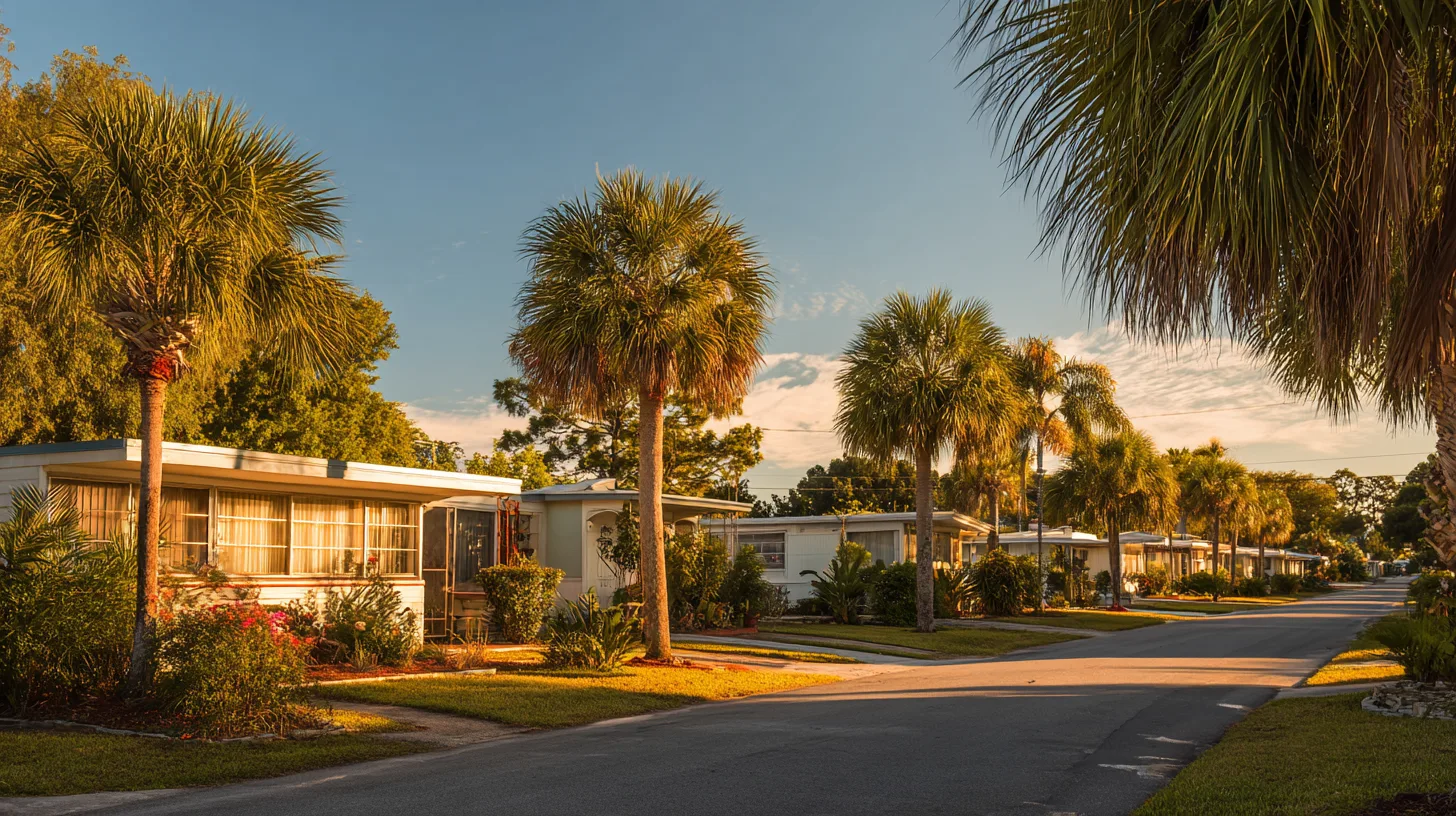
If it dates from the original 1950s or 1960s build and the drains have never been replaced, that is the reasonable assumption. Naples Park was established in the 1950s (Naples Condo Boutique, 2026), and Collier County has a very large proportion of pre-1972 homes with cast iron underground (Revolution Florida, 2026).
- The house was remodelled. Does that mean the drains were done?
Not necessarily. Many original Naples Park homes have been replaced or heavily remodelled (Naples Florida Vacation Homes, 2026), but a remodel above the slab does not always include the buried drain line. A camera inspection is what establishes it rather than the finish level of the kitchen.
- Should I be worried about polybutylene here too?
Less so than in newer neighborhoods. Polybutylene went into Florida homes roughly between 1978 and 1995, and original Naples Park housing predates that window. It is worth confirming the supply material anyway, since properties are sometimes replumbed, but the era points at the drain side first.
- What does the compact lot mean for a repair here?
Naples Park is laid out on a tight grid of numbered streets and avenues, which produces short private laterals compared with the acreage neighborhoods inland. That works in your favor on a repair: a shorter run has fewer joints to fail, less length exposed to root intrusion, and a much smaller excavation if a section has to come out. It also means the distance between a fault and an accessible cleanout is usually modest, so locating is quicker and the dig is contained. The trade-off is proximity. Lots sit close together and services run near boundaries, so establishing exactly where your lateral runs matters more than it would on a larger plot — both to avoid a neighbour's line and to keep the excavation inside your own ground.
- Do neighbouring houses share the same problem?
Frequently, yes, and it is worth knowing. Streets here were built out in runs, so a group of houses on the same block commonly shares a build year, a builder and a specification — which means the same pipe material installed at the same depth in the same soil at the same time. When one property finds a failing section, the houses either side are not a coincidence risk, they are the same experiment at the same stage. That has a practical upside. Neighbours who compare notes get a much clearer picture than any single camera inspection provides, and contractors working several properties on one street can often price the work better than three separate mobilisations.
- How deep is the lateral likely to be?
Shallower than in many markets, because Southwest Florida is flat and a lateral only needs enough fall to reach the main. That is generally good news for a repair: less excavation, less spoil, and less disruption to whatever sits above it. It also means the pipe is closer to surface loads, so driveways, parking and heavy landscaping equipment matter more than they would over a deeper line. Where a lateral runs under a paved area the excavation cost shifts from digging to reinstatement, and that is the number worth asking about specifically.
- Will a repair disturb the neighbours?
Usually only briefly, and only if the fault sits near a boundary. On a compact grid the working space is limited, so the practical questions are where the machine sits, where spoil is stacked and whether access runs past another property. A contractor who walks that before quoting has thought about it; one who has not may discover it on the day. Where a lateral crosses into the public right of way, permitting applies and that adds both time and a fee, typically $500 to $1,500 at that level (Charles & Hudson, 2026).
- Is lining an option on a Naples Park line?
Often, and it is worth asking about because it avoids the trench entirely. Lining installs a resin sleeve inside the existing pipe, and CIPP is the most predictably priced of the options at $70 to $150 per linear foot (Charles & Hudson, 2026). The qualifier on old cast iron is that lining needs enough host pipe left to line against, so a run that has channelled through the invert over a long distance may not qualify. That is a camera question rather than a judgement call, and it is one of the specific things a proper inspection establishes.
- What should the contractor leave you with?
A dated camera record showing the condition before and after, the distance at which the fault sat, what was replaced or lined, and photographs of the work before backfill. On a property where the material is the underlying issue, that record is the baseline that makes the next inspection meaningful rather than another opinion. It is also what you hand a buyer, an insurer or the next contractor, and it costs nothing extra to ask for at the time.
- Who pays for the section in the street?
The private lateral is the property owner's for its whole length, including the portion that runs under the verge or the road to reach the main. That surprises people who reasonably assume anything outside the property line belongs to the utility. What changes in the right of way is not ownership but process: permitting applies, typically $500 to $1,500 at that level (Charles & Hudson, 2026), and the work has to be scheduled rather than started. The one genuine exception is a blockage or surcharge in the main itself, which is the utility's — and if several neighbouring properties are affected at once, that is worth reporting before paying anyone.
- Can the work be done without losing water?
Water and waste are separate systems, so a sewer repair does not interrupt the supply. What it interrupts is drainage, and only while the line is open. On a single-bathroom property that is worth planning around, and on a repair expected to run past a day it is worth asking the contractor how the line will be left overnight. Most sectional repairs are completed and backfilled within a day once access exists, so the disruption is usually shorter than people expect from the size of the excavation.
- What are the signs a Naples Park lateral is failing rather than blocked?
Four, and they separate a condition from an obstruction. Blockages that return on a shortening interval indicate something in the pipe is catching material rather than a one-off obstruction passing through. Multiple fixtures affected together, particularly the lowest ones, means the restriction sits in the main run rather than a branch. Gurgling or a toilet level that drops on its own indicates air being displaced because it cannot escape properly. And sewage smell that persists after the fixtures have been used and refilled points at a break rather than a dry trap. None of these is definitive alone. Together they are the pattern that justifies looking rather than clearing again, and on a line of this era they are the sequence most properties follow before anybody opens the ground.
- How does the water table affect a buried lateral here?
It keeps the outside of the pipe permanently wet, which matters more than it sounds. A high water table means buried pipe never dries, and soil movement after heavy rain shifts and stresses joints, while the warm humid environment accelerates deterioration generally (First Choice Plumbing Solutions, 2026). On cast iron that adds external attack to a pipe already corroding internally. It also affects the repair itself. Excavating below the water table means dealing with water in the trench, which slows the work and occasionally requires pumping to keep the excavation workable. That is a cost factor worth understanding when a quote for a deeper repair looks higher than expected — it frequently reflects ground conditions rather than the pipe work.
- Should the whole run be replaced or just the failed section?
The camera decides it, and the answer is genuinely sectional more often than the industry implies. A single separated joint or a short channelled length with sound pipe either side is a spot repair at roughly $1,500 to $4,000 including excavation (HomeGuide, 2026). General loss along the run is different, and lining or replacing becomes the sensible answer. What should not decide it is a quote written without looking. A recommendation for full replacement produced without camera evidence is a recommendation made without knowing whether full replacement is needed, and asking to see the footage and the distances is a reasonable request that a confident contractor will meet without hesitation.
- What should you do before agreeing to any excavation?
Four things, in order. Get the camera footage and keep a copy, because it is the evidence every subsequent decision rests on. Get the distance and depth of the fault stated in writing, since those two numbers price the job and any contractor with a locator has them. Get the scope written by section rather than by run, so it is clear what is being replaced and what is being left. And get the restoration specified — what happens to the turf, the drive or the planting above the trench, and whether that is in the price or arranged separately. Those four turn a verbal recommendation into something you can compare, negotiate and hold somebody to.
- Is it worth adding a cleanout while the ground is open?
Almost always, and it is the cheapest thing you will ever be offered during this work. A properly placed exterior cleanout makes every future inspection and clearing faster, less invasive and less expensive, because the alternative is pulling a toilet or working through a roof vent. On a property that has just demonstrated it will need attention again, that is not a hypothetical benefit. The cost while a machine is already on site and the ground is already open is a fraction of what installing one as its own job would be, which makes the moment of a repair the obvious time to do it.
- Who should you get to quote, and how many?
Two or three, all pricing from the same camera evidence rather than from their own walkthrough. That single condition is what makes quotes comparable — contractors pricing from a stated fault at a stated distance and depth are pricing the same job, while contractors each forming their own view are pricing three different jobs and the cheapest is not necessarily the cheapest. Ask each to price sectional repair and full replacement separately where both are technically viable, because the spread between those options on the same property tells you something useful about how each contractor reads the evidence. And confirm the license number before the site visit rather than after the quote, since every one of these firms is advertising to perform contracting work.
- What happens after the repair is finished?
The line should be run and camera-checked before backfill, not after. A repair that is buried and then found incomplete costs the excavation twice, and the second dig is not cheaper than the first. Backfill and compaction then matter more than they sound — poorly compacted fill settles, and settlement over a repaired section is how a new belly forms in the same place within a few years. Ask what compaction method is used and whether the surface will be topped up after settlement. Finally, keep the post-repair footage. It becomes the new baseline for the rest of the run, which on a property where only one section was replaced is the part that still needs watching.
- Does a repair affect the property's value or insurability?
A documented one generally helps, and an undocumented one does nothing. A completed repair with a permit, an inspection record and camera footage is evidence a buyer's inspector can verify and an insurer can price against. The same work done without paperwork is indistinguishable from no work at all once the ground is closed. For a seller that difference is material, because a sewer finding during a buyer's due diligence becomes a negotiating point at a number rarely as favorable as doing the work yourself would have been. Keep the permit, the invoice describing what was replaced by section, and the footage. Those three are the whole file.


 JAMIE KLONCZ · GREAT HERON PLUMBING ONLINE